Satire does not always reflect reality; sometimes it runs right into it. In the fifth season’s episode three of ‘The Boys’, Homelander crosses a psychological boundary that the series has been approaching over the years.
He already is unstable, already addicted to power and validation, and he sees a vision of Madelyn Stillwell, serene, comforting, almost divine. However, it is not nostalgia or grief speaking. It’s something much more dangerous: affirmation.
‘The Boys’ Makes Homelander A ‘God’ And America’s Reality Isn’t Far Behind
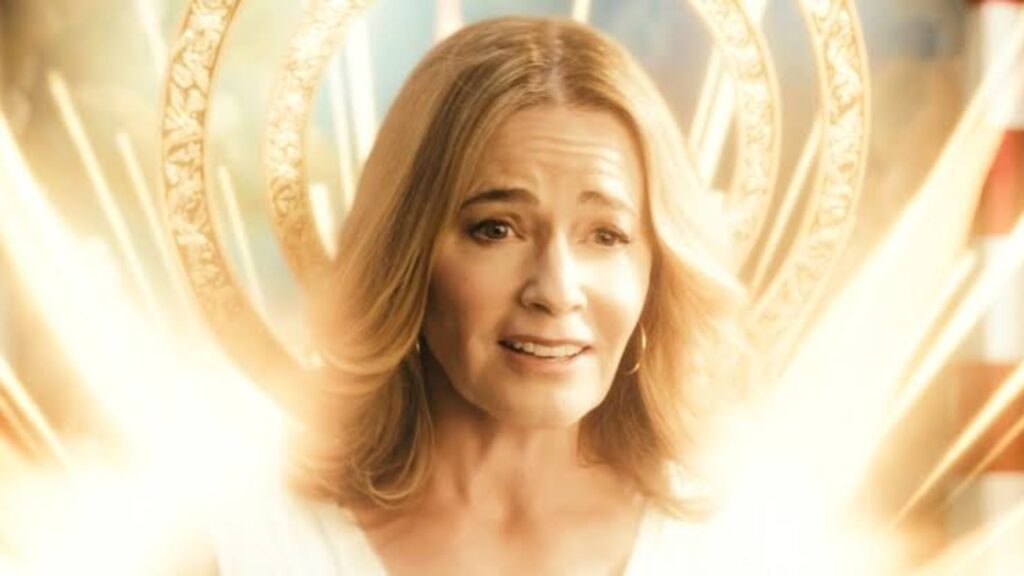
In the vision, she informs him that he is not only a leader but a god. Not metaphorically. Literally. And to Homelander, a man who has always desired love more than control, that thought comes with sickening clarity. People will not leave him if they worship him. It’s absurd. It’s unsettling. And it is no longer fictional somehow.
In case you missed it: What Does Billy Butcher Mean By “Scorched Earth” In ‘The Boys’?
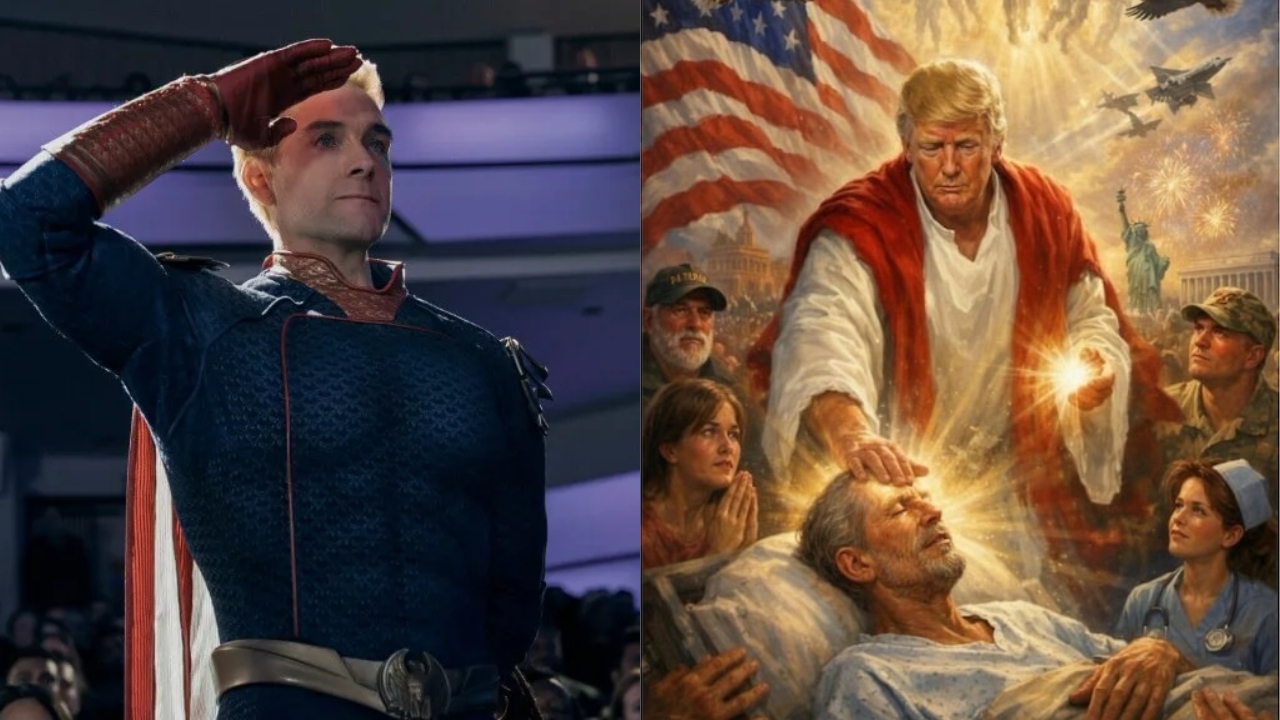
The difference in this moment is its timing. Only a few days before the episode, a real-life political event caused a lot of talk when an image of Donald Trump looking like Jesus Christ, created by AI, went viral. The similarities were not precise, but they did not have to be. The overlap was so accurate that the viewers took a second look.
The creator of the show, Eric Kripke, claims that this was not deliberate. The episode was written many years ago, when the headlines as they are now were not yet formed.
“We wrote this episode two years ago, even before the election,” Kripke told TVLine. “It just came from us talking about where Homelander was moving, and what his sort of final form would be, as he’s been slowly losing his mind over the seasons.“
Homelander’s Final Evolution
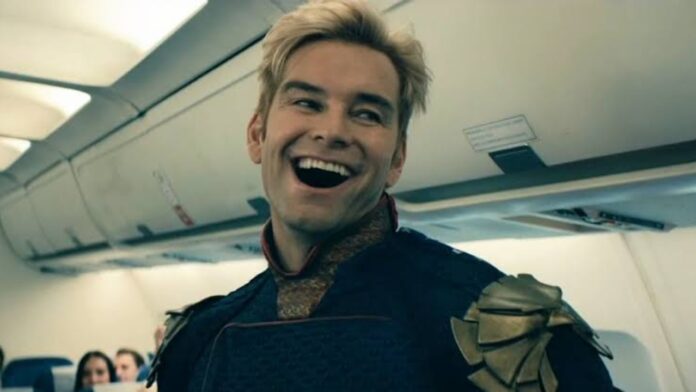
This episode not only demonstrates that Homelander loses control, but it also redefines his whole trajectory. From the beginning, he wasn’t just a villain. He was a creation of seclusion, manipulation, and unbridled authority.
In case you missed it: What Does Billy Butcher Mean By “Scorched Earth” In ‘The Boys’?
What we are experiencing now is not so much a sharp cut but rather the logical end. If no one can challenge him, and if he genuinely believes he’s saving the world, then why wouldn’t he start to see himself as something divine?
Kripke acknowledged that he was initially concerned that this direction would be too cartoonish. “My concern was that everyone would think Homelander had gone too far and it had gotten cartoonish,” Kripke shared. “That was my legitimate concern. But the world keeps out-crazying us. I just want to be like, ‘Yo, we’re trying to do satire! Will you slow down for a minute and give us a chance to be crazier than the world?“
And that’s what makes it stick. Because at its core, this isn’t just about Homelander. It is about the ease with which power can redefine identity, and how quickly faith can become something much more dangerous when no one is left to say “no”.
You might like to read: ‘The Boys’ Just Turned Superheroes Into Influencers And It’s Uncomfortably Real