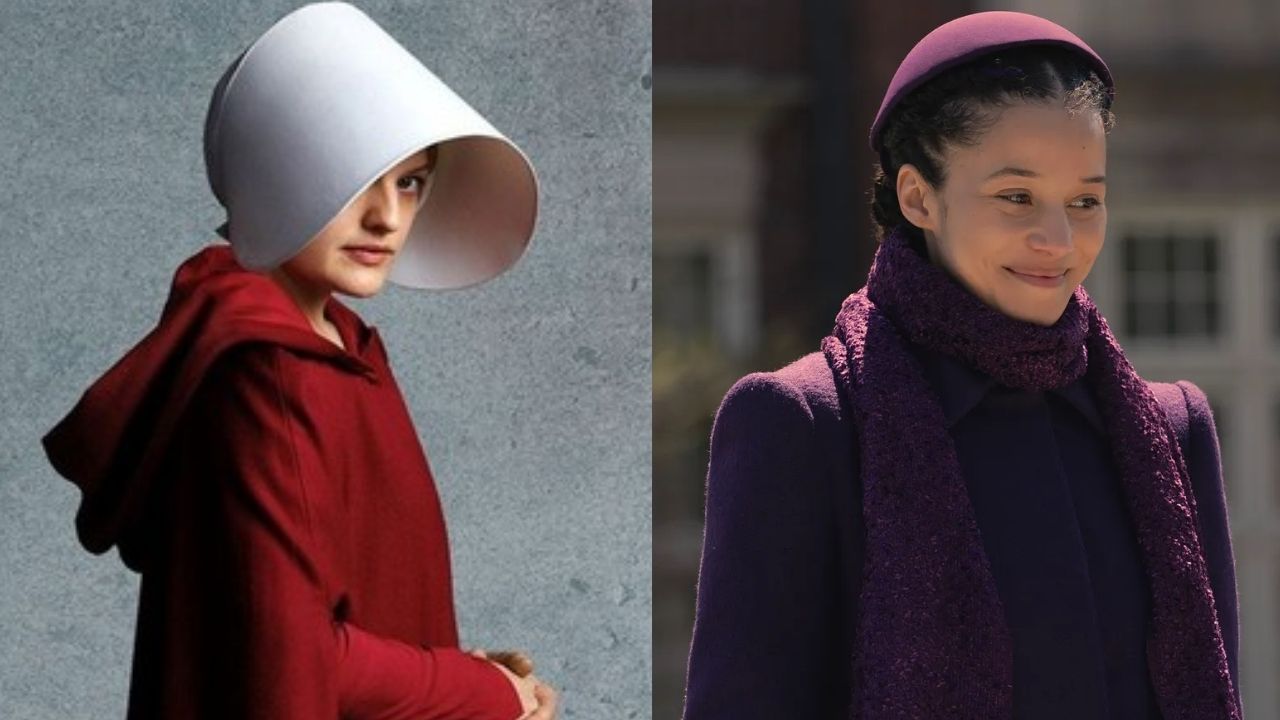
‘The Handmaid’s Tale‘ keeps finding new ways to unsettle viewers, and the latest example is the idea of “wife schools” and the “Plums” in its sequel, ‘The Testaments‘. These details may sound like fresh pieces of Gilead horror, but they are not inventions pulled from thin air.
Author Margaret Atwood built this world from real precedents, and that is what makes this angle so chilling. Be it the wife-training systems or the forced reproduction to dress codes, child theft, and state control over women’s bodies, Gilead reflects patterns the real world has already seen.
Gilead’s “Plums” And “Wife Schools” Have Real-World Roots
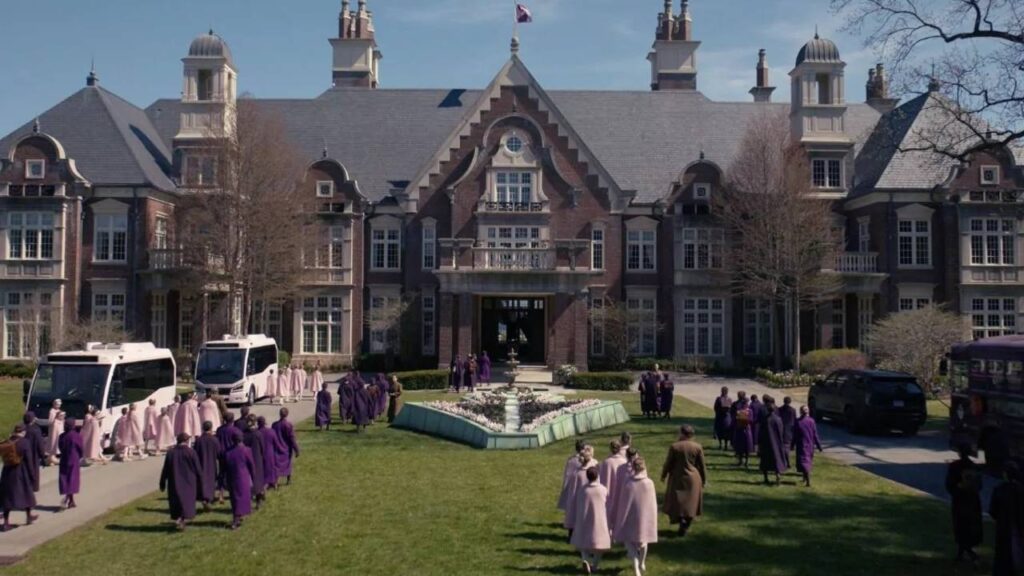
As with so many parts of ‘The Handmaid’s Tale,’ wife schools are not nearly as fictional as they seem. Many dystopian fictions borrow from real life, but Atwood has always gone further than most. She has repeatedly said that she did not invent the brutal customs in her 1985 novel. She only used events, structures, and practices that had already happened somewhere in the world at some point in history.
Related: 10 Most Terrifying Laws In ‘A Handmaid’s Tale’
That rule is clearly visible in the novel, and the television adaptation continues to echo it. Forced separation of parents and children, exile, sexual assault as a war crime, segregation, and forced birth all run through the series. And none of them belongs only to fiction.
The same logic applies to “wife schools.” Real-world parallels range from soft-sell domestic ideology to openly coercive systems. Julie N. Gordon’s book ‘Wife School‘ lays out a 22-week course that teaches women how to use the Bible to become the best wife possible, with the clear idea that a “good wife” serves her husband.
In Russia, the 2019 documentary, ‘School of Seduction,’ examined “seduction schools” that teach women to prioritize becoming a prize for a husband over any other ambition. Russian Womanhood Schools push similarly antiquated ideals and reflect the gender essentialism associated with Putin’s regime. These systems frame the ideal housewife as the highest goal and often pressure women to mute their own desires and interests to fit patriarchal expectations.
How Religion Plays A Sinister Role
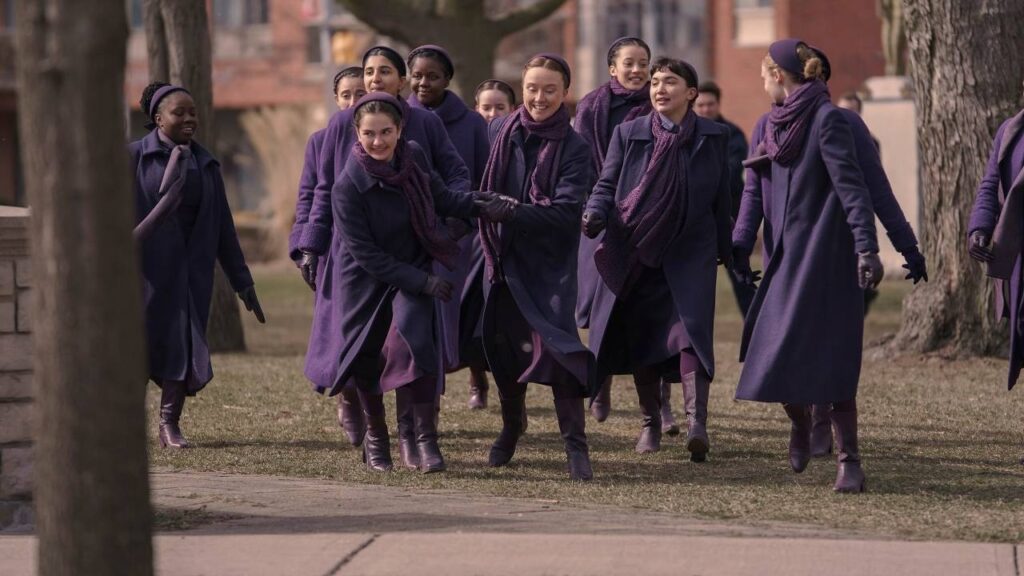
The parallels grow even more in religious cults, where girls often receive explicit training for the role of wife from an early age and get no meaningful choice in the matter. Many of these environments also expect women and girls to help enforce those rules among themselves. One especially stark example is the Fundamentalist Church of Jesus Christ of Latter-Day Saints.
In case you missed it: 15 Best Dystopian Shows Of All Time, Ranked
Under Warren Jeffs, the FLDS built a culture around strict gender roles and demanded obedience from girls who were expected to become dutiful servants in ways that strongly resemble Gilead’s Wives. That is why the “Plums” in ‘The Testaments‘ are so important. They are not just another strange detail. They fit a long and very real pattern in which societies train women to see submission, hierarchy, and male-centered service as virtue.
Both ‘The Handmaid’s Tale‘ and ‘The Testaments‘ succeed not only because they show fascism’s brutality. It’s because they show how fascism slips in. The sequel points this out by showing women in free Canada supporting Gilead’s methods and yearning for its strict order. They have no idea what that order actually costs.
Margaret Atwood Built Gilead From History, Not Fantasy
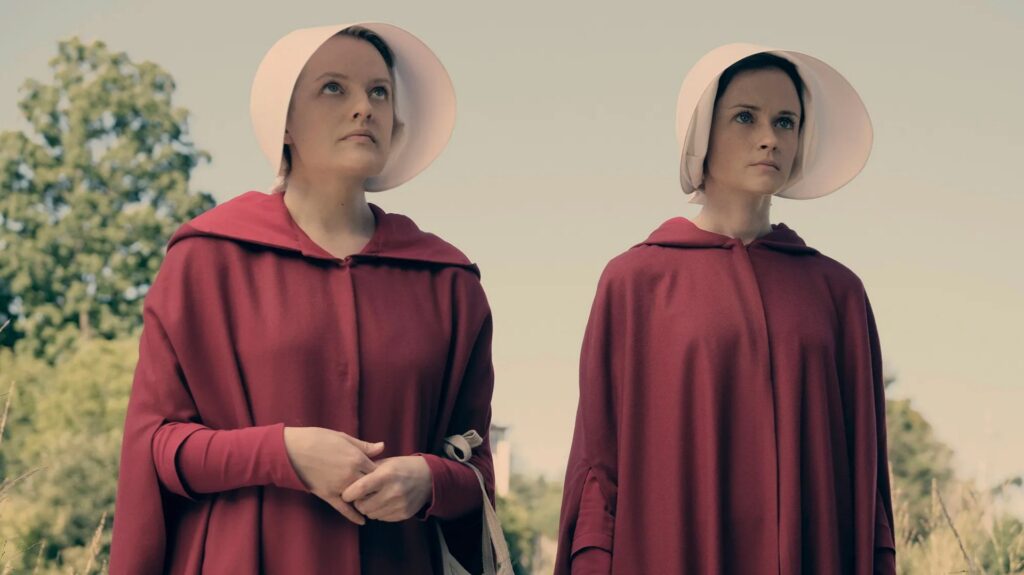
The original book, ‘The Handmaid’s Tale,’ follows June Osborne in a near-future North America where the Constitution has been overthrown. Gilead strips women of their names, rights, money, jobs, and identities, then rounds up fertile women. They tag them in red and force them into sexual servitude and reproductive labor.
The show presents a dark, thought-provoking dystopia. But it also pushes viewers to examine their own society and speak out when lawmakers move to restrict human rights in the name of moral order. As Joseph Fiennes’ Commander chillingly says, “Better never means better for everyone. It always means worse for some.”
Atwood has been very clear about that connection. Speaking to The Guardian when the series launched, she explained that when the book first came out, many people thought it was far-fetched. But she had made sure not to include anything that human beings had not already done somewhere at some time. She made the same point elsewhere in the discussion of her research, recalling the news clippings she collected before writing the novel.
Related: ‘The Handmaid’s Tale’: What Happens To June At The End Of The Book?
One headline about the cult People of Hope especially stayed with her: a group that subordinated women, discouraged social contact with outsiders, arranged marriages, and moved teenage girls into households for indoctrination. The women were called “The Handmaidens of God,” and unlike Gilead’s Handmaids, they functioned more like Wives, policing one another and modeling subservience to husbands.
Atwood also pointed to real political rhetoric around fertility. She remembered a headline in which a Canadian MP essentially urged citizens to “make a baby for Christmas” after low fertility figures caused alarm. That sat beside another story warning that new reproductive technologies could strengthen male control rather than help women. Those ideas flow directly into Gilead’s obsession with childbirth.
It’s All About Politics And Power
The same pattern appears in the show’s wider politics, too. Series creator Bruce Miller described season three with the phrase “Blessed be the fight,” and executive producer Warren Littlefield linked that fight to the real political moment, especially Donald Trump’s rise amidst harassment allegations from dozens of women and Brett Kavanaugh’s nomination to the Supreme Court after Christine Blasey Ford accused him of sexual assault. Yes, the story’s treatment of sexuality also comes straight from real oppression.
In Gilead, homosexuality makes someone a “gender traitor,” a label that can end in execution unless the person is a fertile woman who can still serve the regime as a Handmaid. That brutality has obvious real-world echoes.
In case you missed it: 20 Disturbing Documentaries That Expose Freaky Cults
Homosexuality remained illegal in the UK until 1967, marriage equality only arrived in 2014, and the BBC reported that 69 countries still criminalized homosexuality in 2021. Gilead’s puritanical structure also reflects older forms of American rule. As Atwood noted, the United States did not begin as an Enlightenment republic.
It began as a 17th-century theocracy, and that tendency keeps resurfacing. The Salem witch trials deeply influenced her as well. It’s shown how fear, faith, politics, and hysteria could combine to target women in the name of moral purity.
Gilead’s Brutal Conceptions
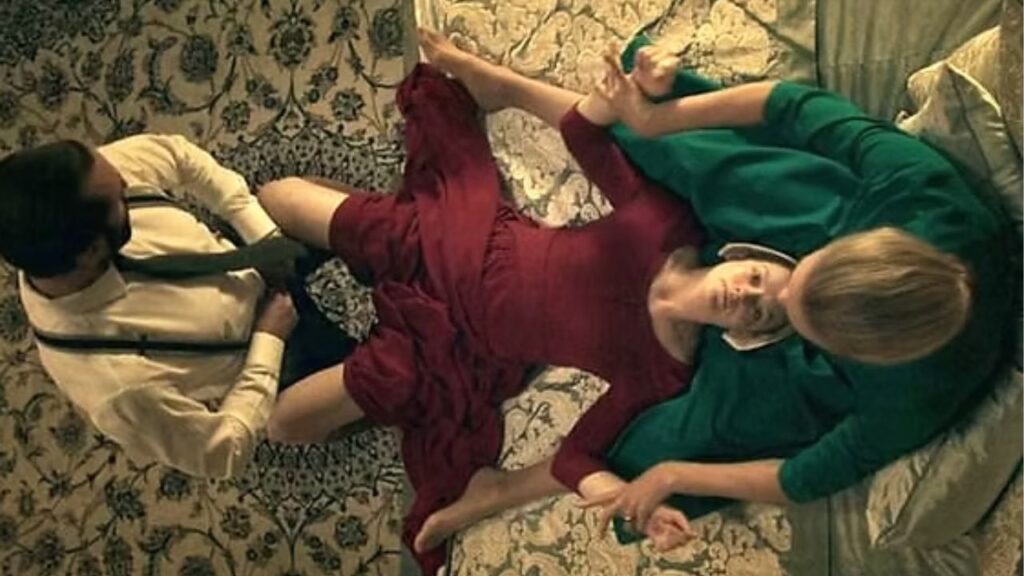
The deeper one looks, the clearer Atwood’s method becomes. Gilead’s reproductive politics mirror major real-world laws and abuses. In the novel, Offred notes that Gilead has no scans, no meaningful prenatal choice, and no abortion access because every pregnancy must go to term. In reality, more than 40 percent of women aged 15 to 44 live in countries where abortion is highly restricted.
Related: 25 Celebrities Who Have Shared Their Abortion Stories
El Salvador, Nicaragua, and the Dominican Republic ban abortion in all circumstances. Whereas, Poland tightened its law to block terminations even in cases of severe and irreversible fetal defects. In 2021, Texas Governor Greg Abbott signed the “heartbeat bill,” which banned abortion after about six weeks, even in cases of sexual assault by strangers and even relatives.
Romania’s Decree 770 offers an even closer parallel. In 1966, Nicolae Ceaușescu banned birth control and abortion. They also ordered women to have five children, imposed gynecological surveillance, taxed childlessness, and glorified motherhood. The result was a baby boom and soaring maternal death rates. More than 9,000 women died from unsafe abortions. Around 100,000 abandoned children were left in brutal orphanages before the law was reversed in 1990.
How Children Become Currency

Gilead’s forced surrogacy and child theft also come from history. In the series, Handmaids bear children for elite households. Then, they watch those babies get raised by the wives of the men who rape them. Australia took Indigenous children from their families into institutions or white homes as recently as the 1970s. The United States and Canada carried out similar removals through the Adoption Era and residential schools.
Ireland’s Magdalene laundries punished young women for supposed immorality, forced them into labor, and took away their babies. In fact, around 2,000 are sent to adoptive families in the United States alone. Atwood also pointed to Argentina, where the dictatorship kept pregnant women alive until they gave birth. They handed the babies to loyal families, and then killed the mothers.
In case you missed it: 10 Most Brutal Deaths In ‘The Handmaid’s Tale’
She even invoked Hitler’s theft of blond children, whom the Nazis hoped to absorb into a “better” racial future. As Atwood put it, totalitarianism always decides who should have babies and what should happen to those babies. The show’s physical punishments and visual systems of control also come from reality.
The Warped Morality Of ‘The Handmaid’s Tale’ World
Gilead mutilates women for “immorality,” and it uses Female Genital Mutilation (FGM) as a corrective punishment against those it deems “unwomen.” In real life, an estimated 140 million women and girls have undergone female genital mutilation, often without anesthesia. And around 23,000 girls in the UK were considered at risk even after the practice was criminalized there in 1985.
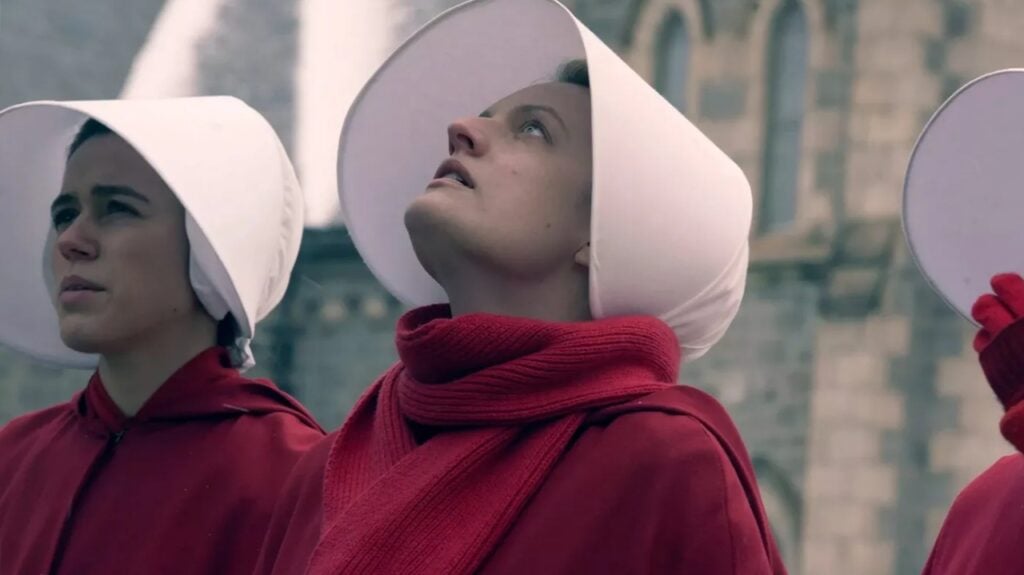
Nimco Ali of Daughters of Eve described FGM as a way to break girls and mold them into what men want. Gilead’s dress codes work the same way. The Handmaids’ red robes draw from Puritan clothing and Catholic habits. Whereas, real communities like the Amish and the FLDS still impose strict clothing rules on women.
Related: Top 25 Shows Based On True Stories
The Colors In Gilead Have Deep Symbolism
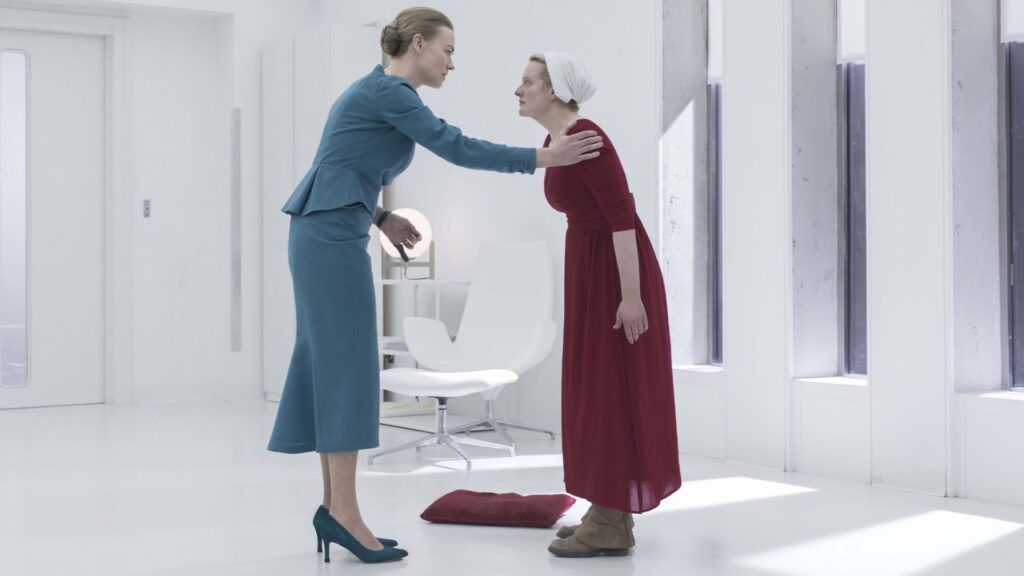
Atwood also linked Gilead’s uniforms to Nazi Germany, where Jews had to wear yellow identifiers that marked them out as rightless. Serena Joy’s role has a real political shadow, too. Before Gilead, she publicly argued that women belonged in the home. It’s much like anti-feminist activist Phyllis Schlafly, who campaigned against the Equal Rights Amendment only to later face sexist arguments herself when she pursued leadership.
Even Gilead’s broader structure of terror closely follows history. The Colonies, where Emily is sent to clean radioactive waste, recall Soviet prisoners forced into uranium mines in the 1970s. It’s where extreme exposure reduced life expectancy to about two years. Janine’s public blaming after being sexually brutalised by a gang reminds us of the very real tendency to shame survivors rather than protect them. It’s something reflected in the dire prosecution rates.
Why Women’s Rights Disappear
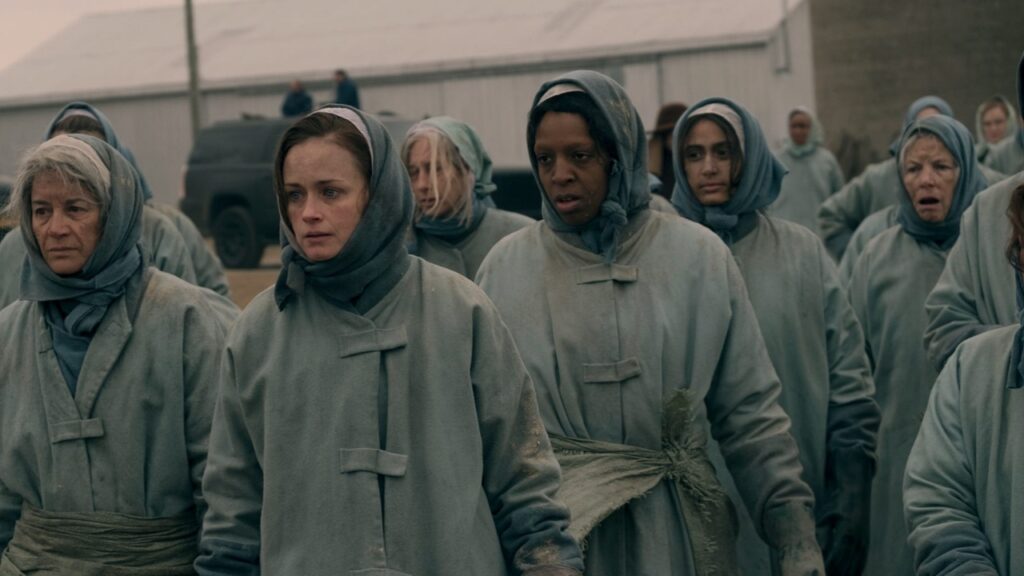
Gilead’s freezing of women’s bank accounts, expelling them from work, and stripping them of rights is reminiscent of Kristallnacht and the Nazi destruction of Jewish life, property, mobility, and personhood. Its rise after a terrorist attack and the slaughter of Congress shows how authoritarian regimes use a crisis to suspend rights. It’s just as the Nazis exploited the assassination of Ernst vom Rath to inflame anti-Semitic violence.
Across Gilead, people are sorted, renamed, surveilled, and sent to die. It’s just like the Holocaust turned human beings into categories of use or disposal. That is why ‘The Handmaid’s Tale‘ still feels so urgent. June and Moira marching for their rights inevitably calls to mind the Women’s March of 2017, when millions protested misogyny in the real world.
The warning remains the same now as it was when Atwood said the story was unfolding before our eyes. Societies do not collapse into cruelty by accident. They get there through laws, habits, institutions, fear, and people who fail to notice the change until it is already everywhere. And that is why wife schools are no Gilead invention at all. They are history, repackaged in blue dresses, polished etiquette, and promises of order.
You might also like to read: 10 Films That Let Women Be Flawed, Complex and Real