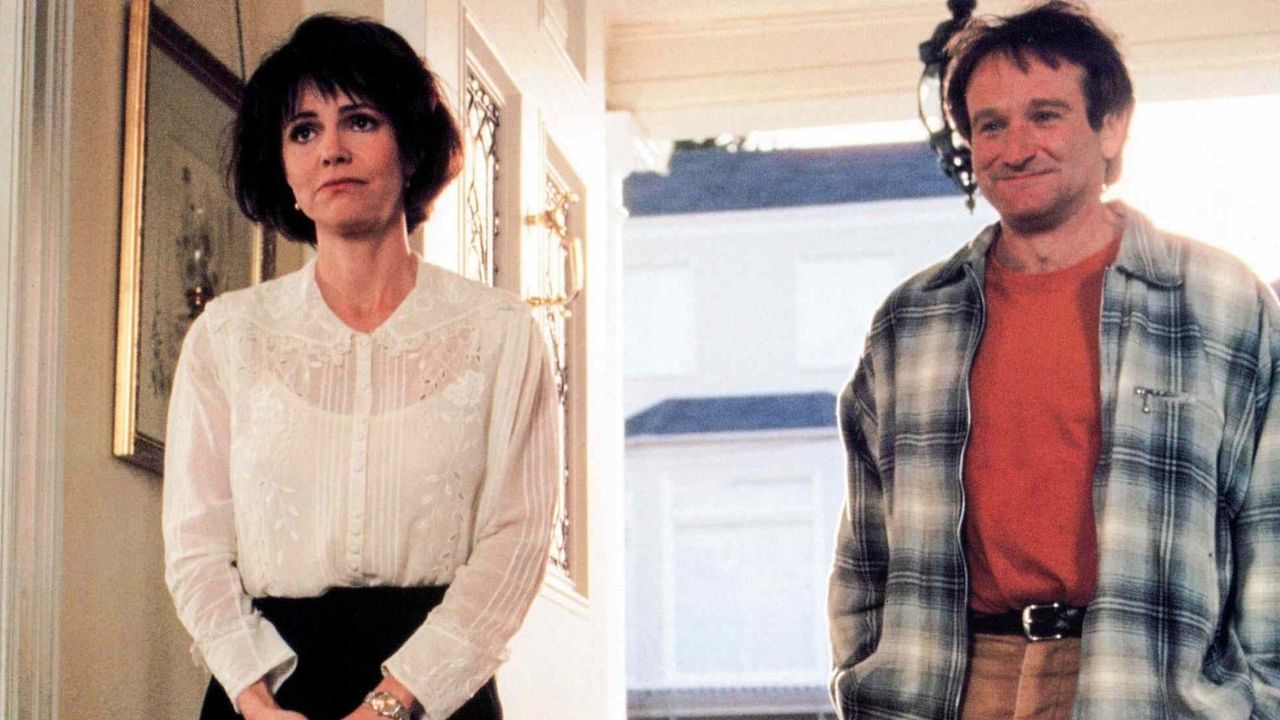
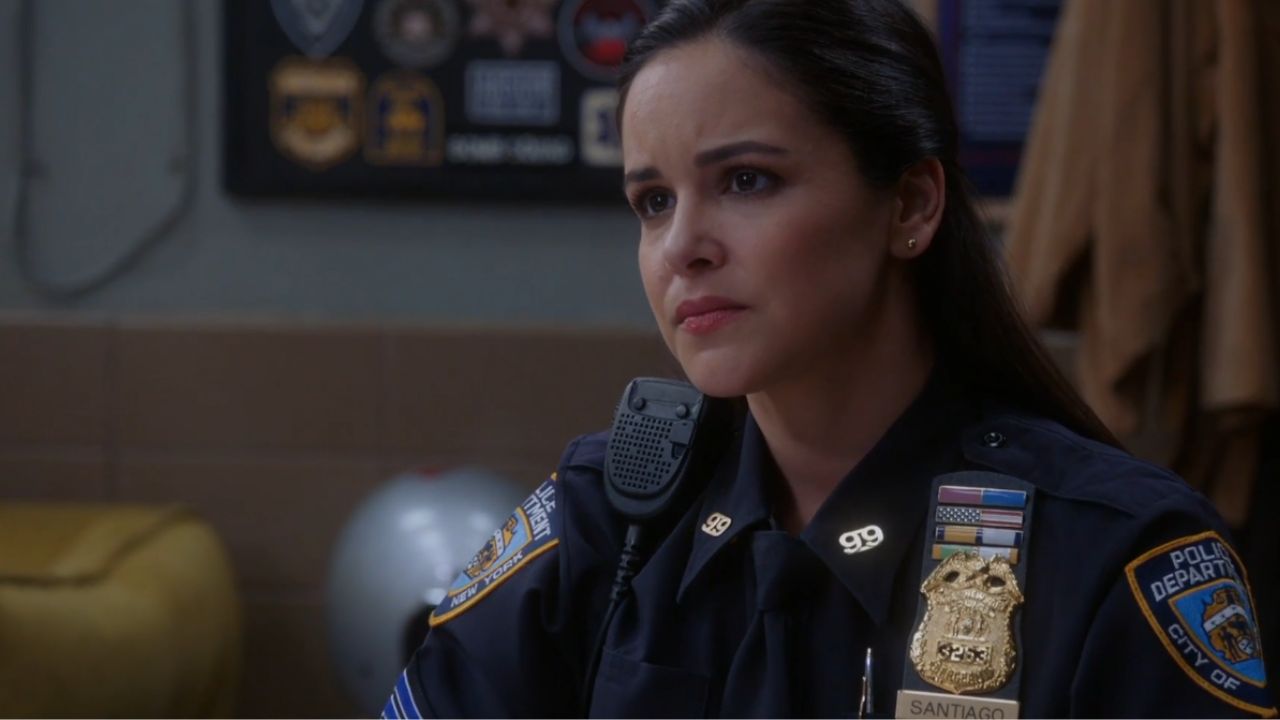
Art has always been used as a medium to bring up grave societal issues, and it will never cease to do so. Even before the #MeToo label came up, art was doing the same across every medium. But it is also true that the movement inspired a new wave of representation on television.
We have gotten many such stories since then, but for several reasons, ‘Brooklyn Nine-Nine’ stands out particularly. A rewatch of the series, especially the episode “He Said, She Said,” reveals just how fundamental yet unique the sitcom’s #MeToo take was.
A Case That Is More Complicated Than It Seems
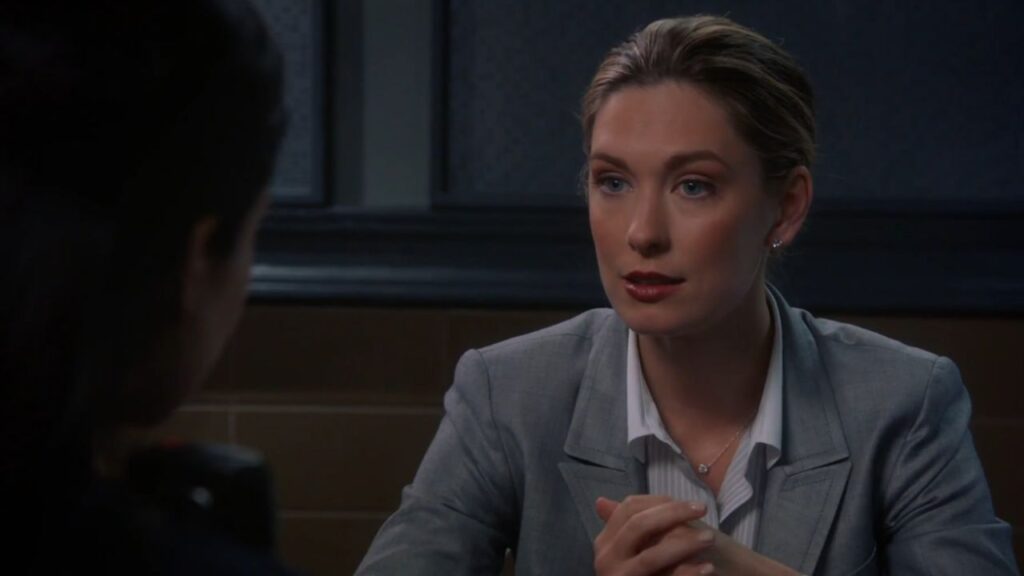
‘Brooklyn Nine-Nine’ was never afraid to tackle serious social issues. It always had its trademark warmth and humor but was also never afraid to get down and real. It is this complicated dichotomy that we find in “He Said, She Said”.
The episode starts with what sounds like another ridiculously hilarious case: a financial consultant has a broken p***s. Jake and Amy initially treat the situation as another bizarre case to joke about. Until they discover the injury happened because the man’s female coworker, Keri, injured him while fighting back against what she says was an attempted sexual assault.
Related: Top 10 Cameos In ‘Brooklyn Nine-Nine’ You Might Have Forgotten
The case immediately becomes very personal to Amy. She encourages Keri to reject a large amount of hush money and hold her perpetrator accountable. This is when another perspective comes in. Rosa points out that without very concrete physical evidence, securing a conviction could be extremely difficult and that rejecting the settlement could have serious consequences for Keri.
Neither of them is completely wrong, which is where the episode’s greatness lies. It brings in the very real perspective that gender issues are far more layered, tangled and complicated than humanly possible to fully comprehend and solve. And this is the reason why this toxic system continues to thrive in our society. There is no simple right and wrong. And no matter what resolution, the victim stands to lose in some way or another.
‘Brooklyn Nine-Nine’ Gives Everyone A Place In The Conversation
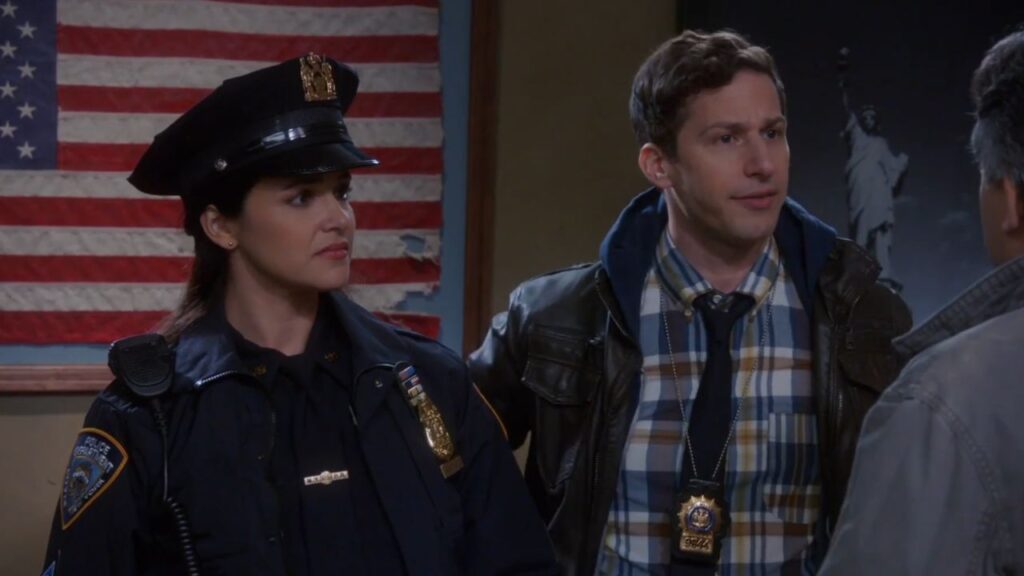
Another remarkable aspect that stands out is the decision to give Jake an important role in the episode without making him the hero of the story. Amy explains that men often do not understand the harassment women experience every day. The show briefly shows in flashback the contrast between the way Jake and Amy are treated in similar daily situations.
The stark contrast between their experiences is nothing new. It is actually very true and, sadly, normal. But seeing this from both the woman’s and man’s perspective somehow feels incredibly acknowledging.
Later, Jake even struggles with whether he should participate in the conversation at all. “I feel like I shouldn’t be here.” Then he wonders whether he should be there because “men should be part of the conversation”. He finally settles on, “I’ve landed on active listening; I will no longer be chiming in.”
Somehow, Jake lands on a very understated but effective form of allyship. Sometimes supporting someone means accepting the problem, acknowledging it and stepping back when the situation needs you to.
In Case You Missed It: 10 Most Interesting Cases In ‘Brooklyn Nine-Nine’
There Is No Easy, Happy Ending And That Is Okay
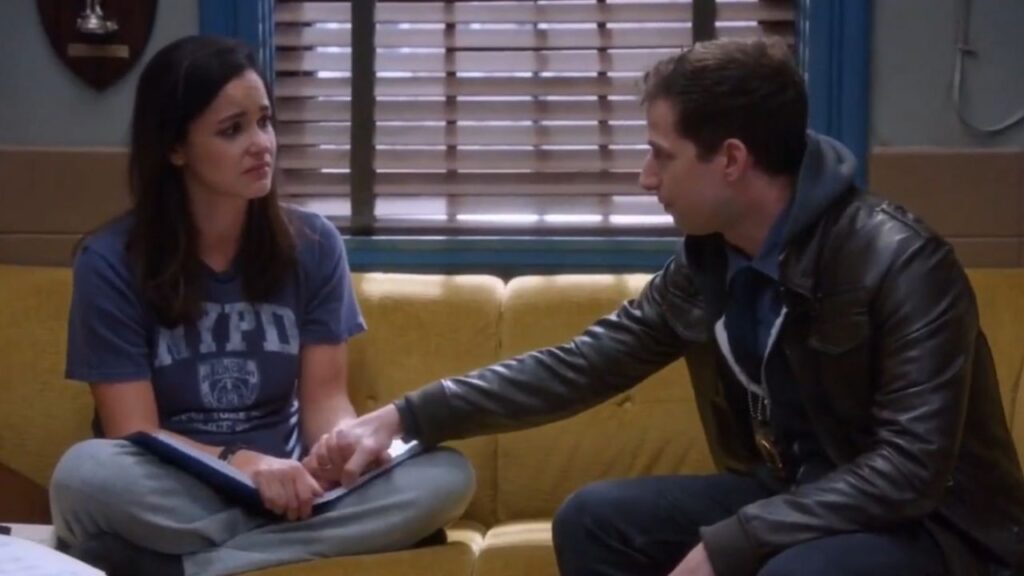
The show becomes even more personal when Amy reveals her experience. She originally transferred to the precinct after a former mentor attempted to use his position of power to pressure her into a sexual relationship with him. Melissa Fumero’s acting here never fails to choke you up a little. The show deviates from its usual filming technique in this particular scene. Stephanie Beatriz, a cast member and also the director of this episode focuses entirely on Jake and Amy’s faces in close-up during this scene.
These incidents themselves are so inherent to the experiences of women that it is never merely an inappropriate behaviour. It makes you question your own ability, sanity, worth and identity. The show does not pretend there is an easy way out of this that leads to a happy ending. Because there is no straight solution to break down a dynamic that has been ingrained in human society for centuries.
But what particularly makes this episode stand out is the way the show decided to approach and represent the issue. For once, there is no satisfying resolution or a very inspiring speech that fixes workplace harassment once and for all. Instead, the focus is completely on listening to the survivors, putting their issue at the forefront, and respecting their voices.
Keri is not merely a plot device. Through her character, every woman finds herself represented. She is damned if she does and damned if she does not. ‘Brooklyn Nine-Nine’ does a great job of recognising just how deep these power dynamics run and how complicated the aftermath can be.
A Timelessly Optimistic Conclusion

Yet even after all that, the episode manages to end on an optimistic note that still holds up today. If women are allowed to tell their stories and are actually believed, it can challenge the narratives society has accepted for far too long.
And, of course, there is comedy. It is dark, uncomfortable and deliberately imperfect. But the narrative finds a way to laugh even in this situation, humanises the characters and ends with a hopeful call to listen. “He Said, She Said” is one of the strongest examples of a sitcom presenting a complicated social issue without reducing it to a punchline.
‘Brooklyn Nine-Nine’ once again does what it does best: subtly discuss social issues through a multifaceted and complex lens while not losing its touch of warmth and humor. When it comes to popular media, it is always easy and is sadly the norm to get laughs by being mean. It is not easy to get them by being genuine, but maybe the attempt is enough and exceptionally remarkable.
You Might Also Like To Read: Top 10 LGBTQ+ TV Characters Who Transformed Representation