
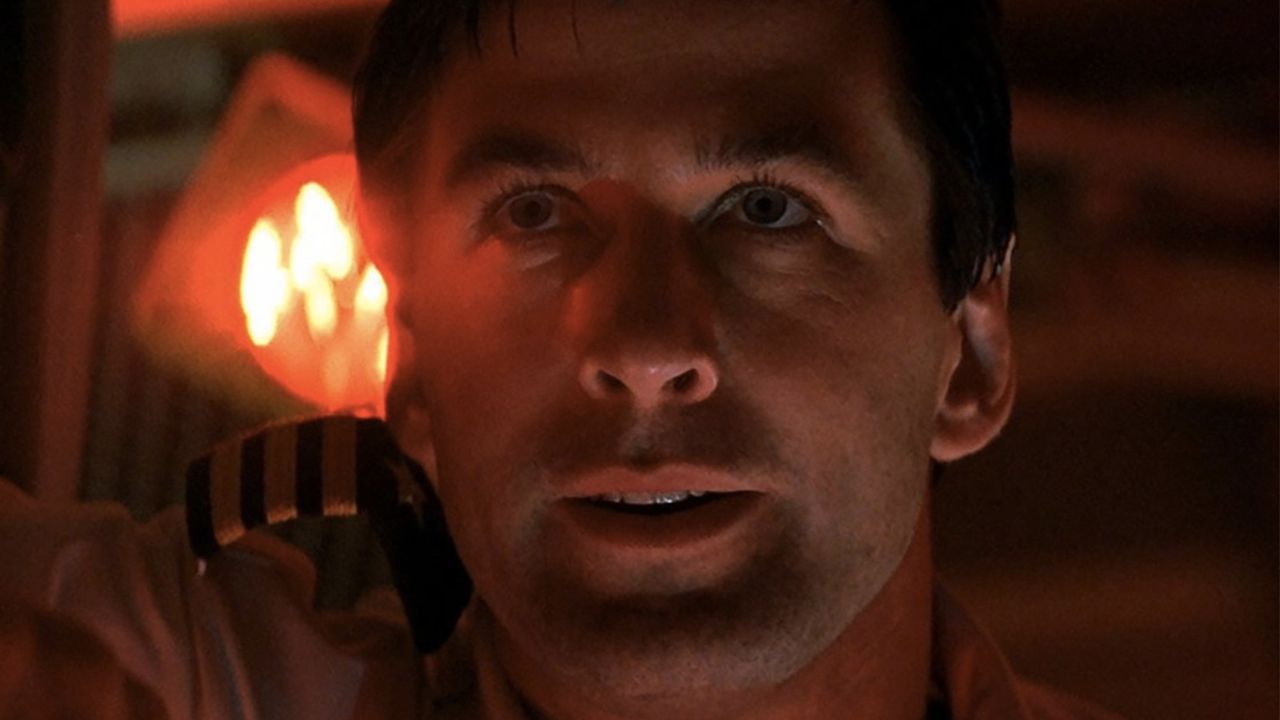
Before making a name for himself in Hollywood, Alec Baldwin took on the challenging role of Jack Ryan in the 1990s, ‘The Hunt for Red October,’ amid the very real danger of being overshadowed. Playing opposite the legendary Sean Connery, Baldwin struggled to overcome the very personal fear of being eclipsed by his co-actor’s mythic status. But instead of shrinking under that pressure, Baldwin turned his insecurity into one of the role’s greatest strengths, playing Jack Ryan as a quiet but intelligent analyst whose inner uncertainty reflected the growing tension at the heart of the film.
By leveraging Baldwin’s fear of disappearance, director John McTiernan transformed this potentially problematic dynamic into the very thing that gives ‘The Hunt for Red October‘ much of its emotional depth. Far from a mindless action film, the movie became a thoughtful exploration of humanity, made all the more compelling by the unique pairing of Baldwin’s young outsider and the old-school, seasoned Soviet commander played by Sean Connery.
Acting Beside Sean Connery Turned Into A Strength
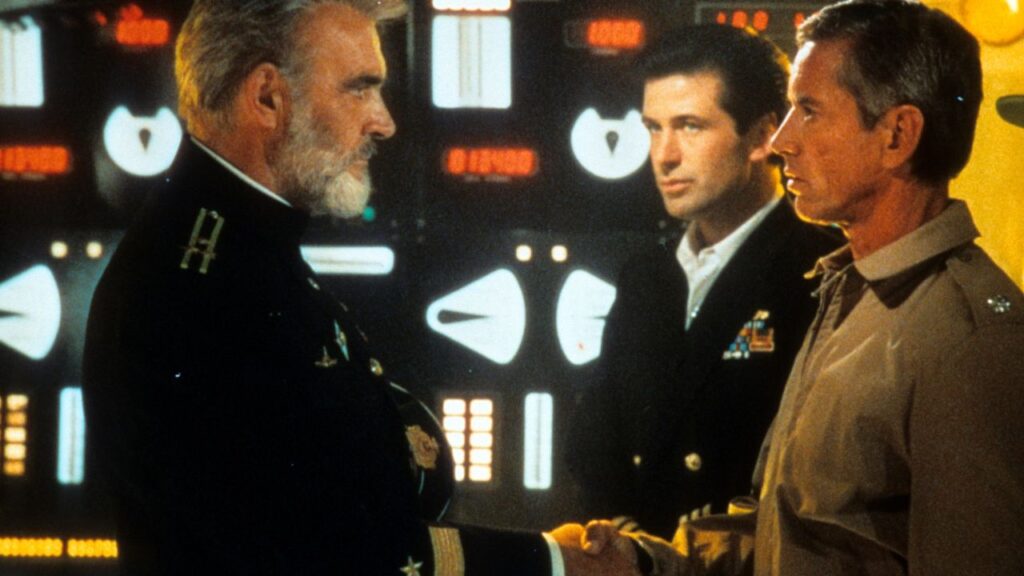
When Alec Baldwin appeared in ‘The Hunt for Red October,’ he was still striving to find the right role that would put him on the map.
Facing off against Sean Connery, however, meant that Baldwin found himself in a tricky situation, as Connery brought decades of screen experience and an entire mythic aura of James Bond to set.
Baldwin once admitted that acting opposite Connery terrified him, as he was afraid he would become “invisible” and that audiences would focus on the other’s performance.
Related: 10 Must-Watch Cold War Movies
“Sean had that ability to stand there for five to 10 minutes. He was like, ‘Yes, it’s me. I’ll wait for this feeling you’re feeling to pass over you.’ I don’t mean that in an arrogant way. It had nothing to do with him. It was all about me and my reaction to him. But then we shot these scenes, and he was very, very generous and very wonderful to work with.” Baldwin told The Hollywood Reporter while reflecting on the experience.
This fear clearly influenced Baldwin’s interpretation of Jack Ryan, who is neither a stereotypical young male nor a traditional action hero. On the contrary, Ryan emerges as an analyst trying to convince military men that Marko Ramius (played by Sean Connery) is not an enemy.
In some way, Baldwin’s nervousness served him well. The actor uses the discomfort felt by a younger man in a room full of older men as the basis for Ryan’s personality.
The effect is incredibly powerful. Connery’s mythic presence never overwhelms Baldwin. On the contrary, the director uses Baldwin’s insecurity to force him to create a more human character that brings emotional depth to the film.
John McTiernan Used The Gap Between To Make The Story Human
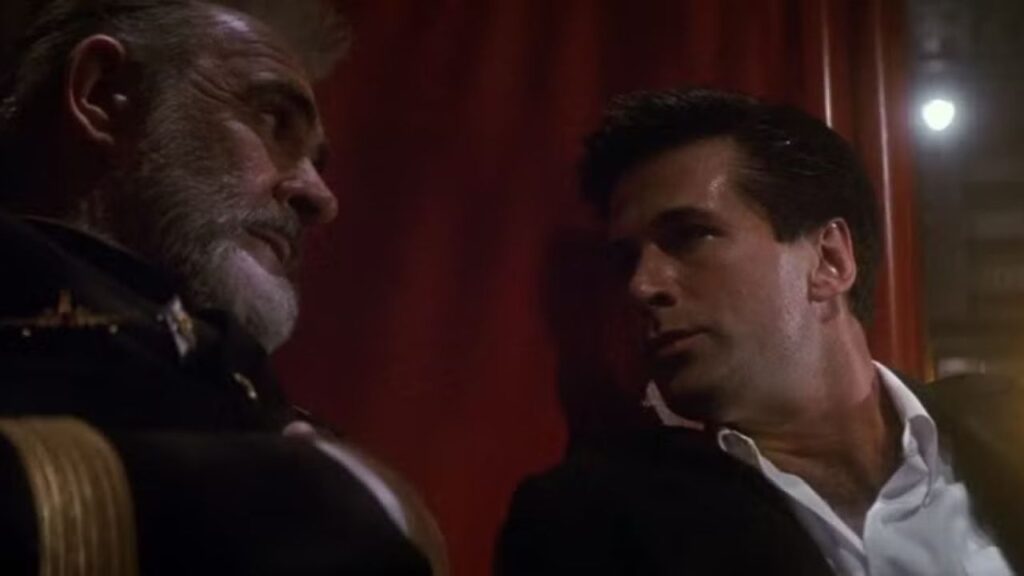
Director John McTiernan was fully aware of the power of the mismatch between Alec Baldwin and Sean Connery. Instead of framing the actors as equals, who are fighting for the audience’s attention, McTiernan created a contrast that becomes the core of ‘The Hunt for Red October.’
On the one hand, Connery plays Marko Ramius, a calm, confident, and old-fashioned soldier. At the same time, Baldwin is Jack Ryan, a young intellectual struggling with the dominant military culture.
In case you missed it: 10 Best Movies About Nuclear War We Think Everyone Should Watch
Such an opposition adds a layer of emotional texture to the action movie and helps create memorable characters.
Baldwin is frequently portrayed as someone who feels out of place and uncomfortable in the presence of generals, admirals, and other figures of authority, which emphasizes the idea that he does not belong in the military setting.
But Baldwin’s quiet performance gains particular significance precisely because of that. It allows the audience to develop trust in his character.
In essence, Connery’s presence turns into one of the tools of McTiernan’s craft. Even though the two characters only share the screen during the film’s climax, the inherent tension between two forms of masculinity is palpable: one representing certain old-fashioned values and the other being more vulnerable and uncertain.
You might also like to read: 10 War Movies That Actually Get History Right