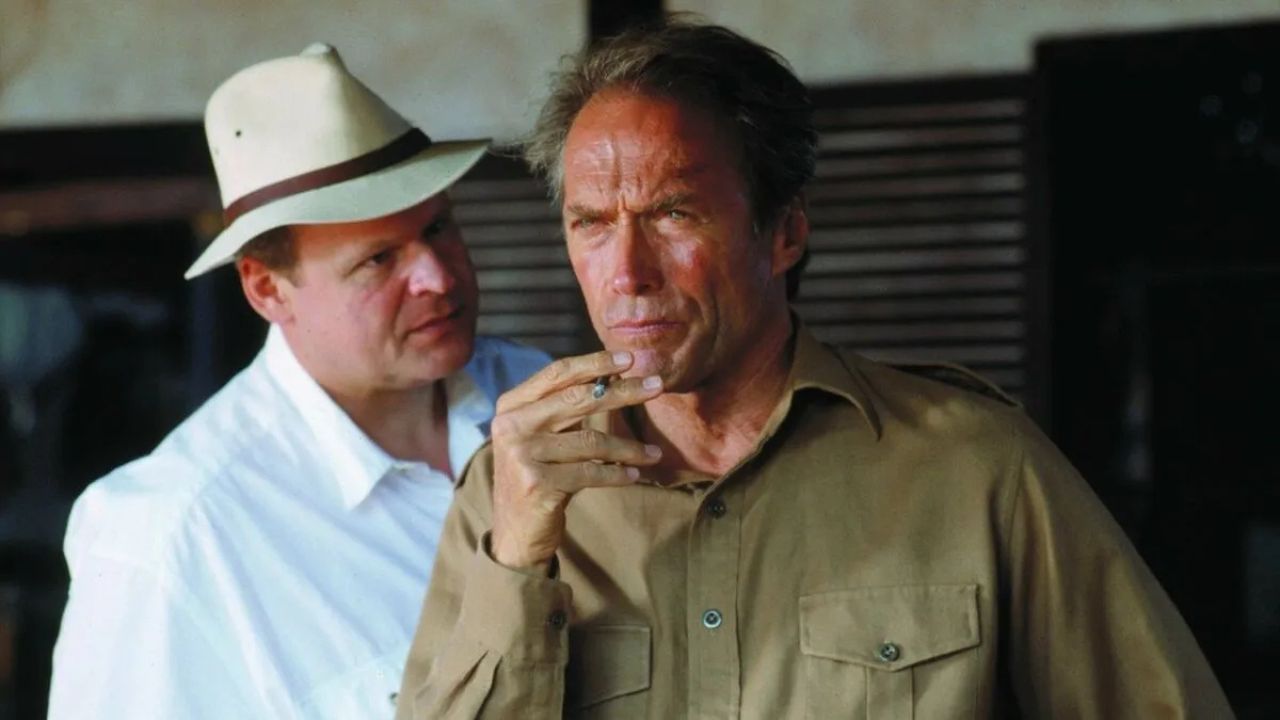
Before reviving his iconic relationship with the Western genre through ‘Unforgiven,’ Clint Eastwood offered audiences a radical revision of his tough guy persona in 1990 with ‘White Hunter Black Heart.’ In it, the actor plays a fictitious version of renowned filmmaker John Huston called John Wilson. Rather than extolling masculine qualities, the picture takes a hard look at the concept of male toughness and reveals that it is nothing more than a desperate act stemming from a terrifying void inside a man.
Set against the backdrop of an adventurous African safari, Eastwood removes any romantic notions associated with such adventures in order to offer a biting commentary on the destructive nature of unbridled hubris. As Wilson relentlessly pursues an elephant, the viewer sees the idea of traditional toughness transformed into tragedy. It becomes evident that this sort of masculine bravado is an empty act of grandeur, one that leaves a terrible trail of devastation in its wake.
Clint Eastwood Exposed The Fragility Of Traditional Masculinity
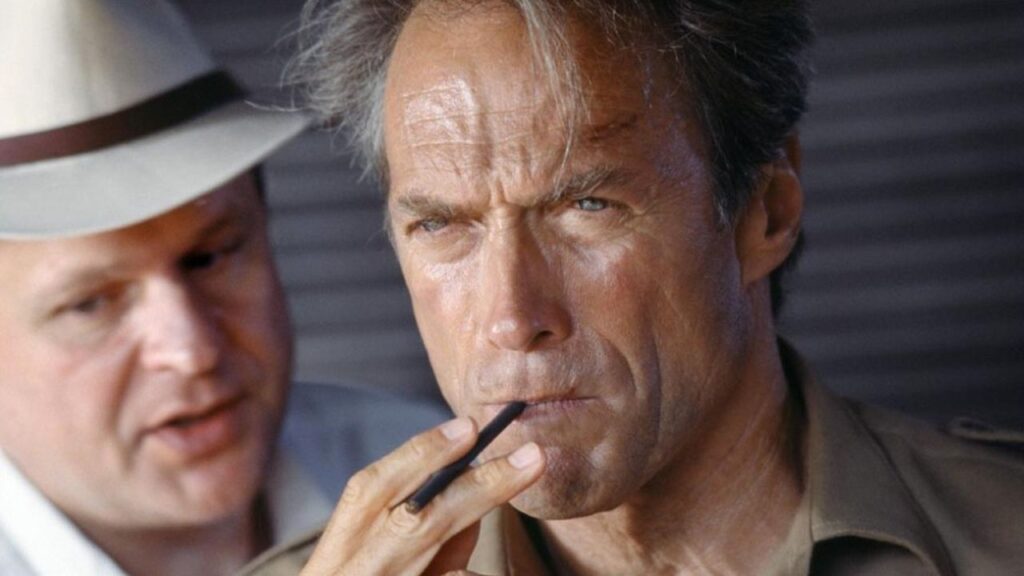
For years, Clint Eastwood played the role of a gunslinging hero. This mysterious figure never spoke much but faced violence, danger, and chaos head-on without blinking.
However, with ‘White Hunter Black Heart,’ that tough-guy persona starts to fall apart piece by piece as it becomes apparent that masculinity itself is nothing more than a desperate attempt to cope with inner fragility. As the picture’s protagonist, John Wilson represents Eastwood’s imagination of John Huston, an artist driven by reckless obsession.
Wilson exudes charisma, wit, and charm. Despite all of that, however, there exists an inner weakness, a need to prove oneself in a world where artistry is no longer enough.
By obsessively pursuing a wild elephant, the man proves how hollow and spiritually depleted he truly is. This is precisely what makes the film stand out in terms of Eastwood’s overall body of work—in it, masculinity becomes a deeply flawed illusion of dominance.
Through this story of artistic downfall, Eastwood shows viewers the extent to which traditional masculinity is tied to arrogance and denial. By playing John Wilson, the actor demonstrates that a man obsessed with power and glory ultimately succumbs to ego.
He is constantly seeking validation through violence because he cannot allow himself to show even a shred of humanity. In other words, Eastwood turns machismo into a performative endeavor.
The Film Explored How Adventure Takes Tragic Turn Of Events
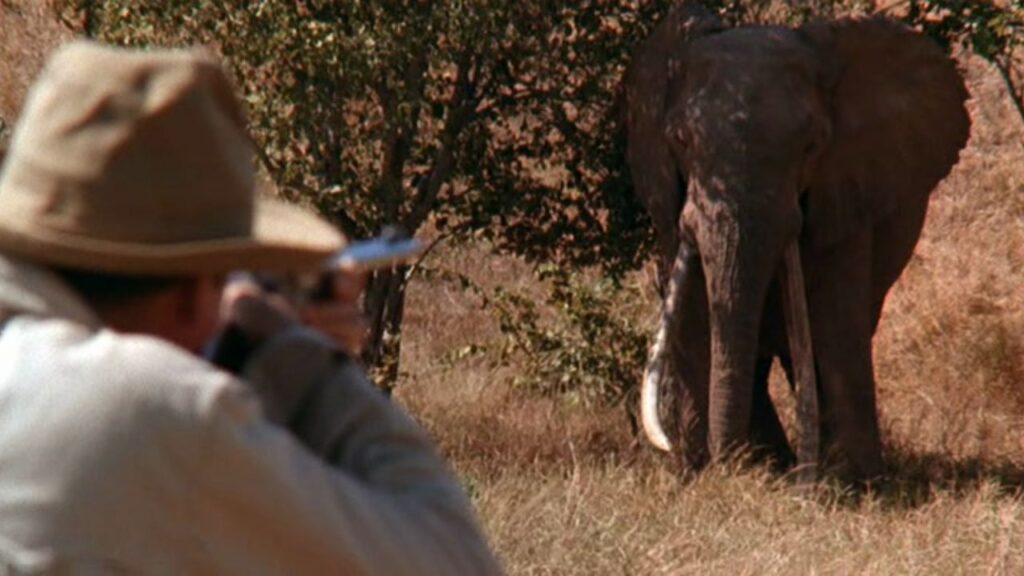
One might think that with ‘White Hunter Black Heart,’ Eastwood is returning to adventure films. Indeed, the movie includes many elements reminiscent of the classic Hollywood genre.
There are distant lands full of wonders, the chaos of filmmaking, and an exciting African safari. However, upon closer inspection, one discovers that Eastwood chooses not to romanticize this type of cinema. On the contrary, he uses it to criticize arrogance.
Wilson does recognize the beauty of the African landscape, but views it not as a living place with human complexity, but as a grand stage to indulge his personal fixation. The actor arrives to make a motion picture, but quickly allows the production to descend into chaos as his true fixation becomes killing an elephant.
In case you missed it: Kevin Costner And Clint Eastwood Clashed Constantly While Filming ‘A Perfect World’. Here’s Why
Herein lies the radical element of ‘White Hunter Black Heart‘ because it offers a complete transformation of the famous Clint Eastwood persona. Previously, most of his characters were calm, collected, and morally unambiguous.
Wilson, by contrast, embodies the antithesis of such qualities: he indulges in self-centered pleasure and ignores the consequences of his reckless actions. At times, his charm almost helps to overlook the tragedy at hand.
By the end of the film, Eastwood manages to turn the very notion of toughness into tragedy. No longer a virtue associated with power and courage, strength is reframed as a tragic struggle to deal with one’s inner demons.
You might also like to read: The Ruthless Reason Clint Eastwood Demands Absolute Discipline On Every Set