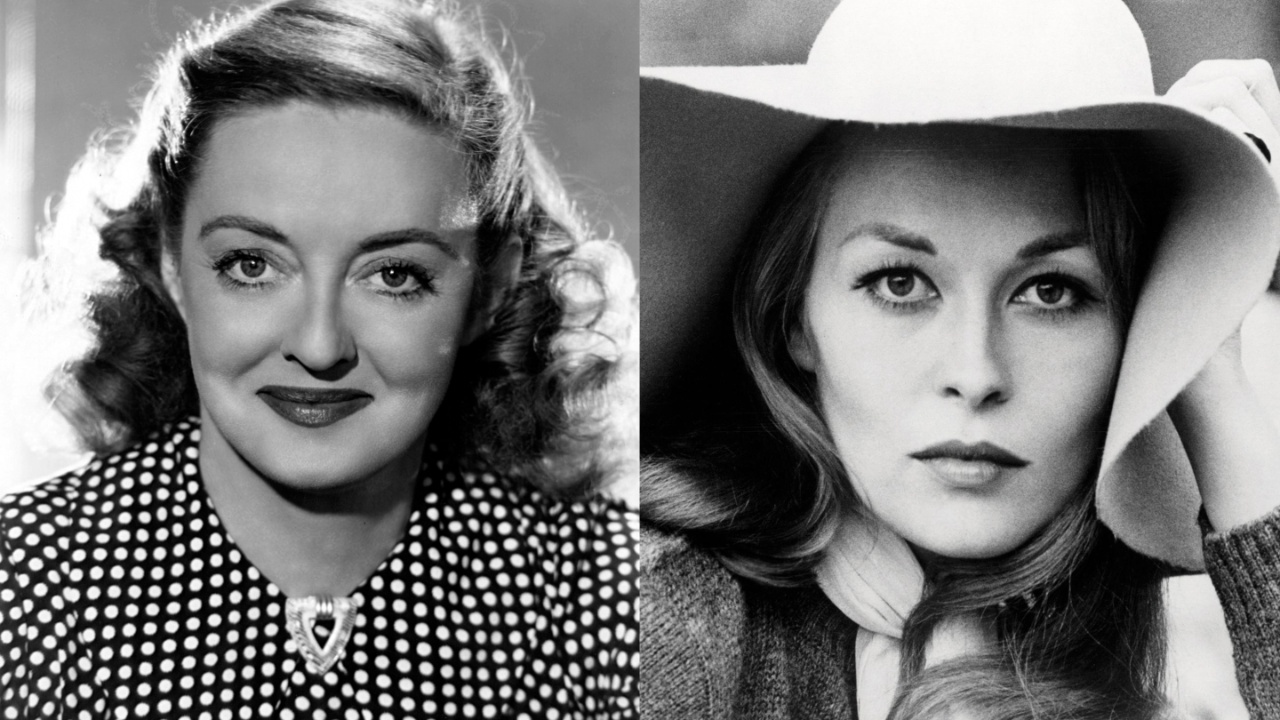
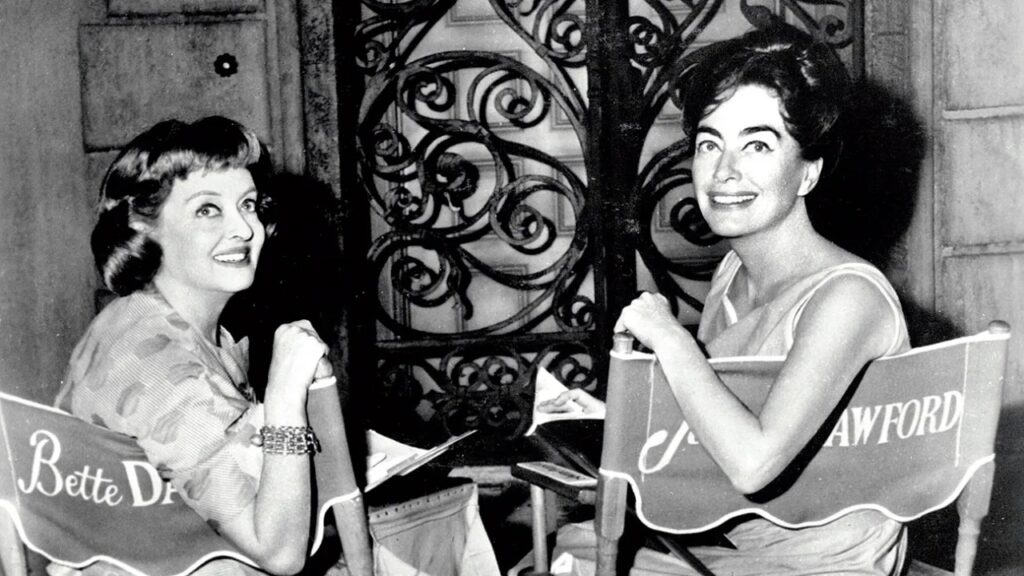
For decades, Hollywood lore has been dominated by the legendary feud between Bette Davis and Joan Crawford, a backlot battle so vicious it defined “hagsploitation” and captivated the public for generations. But according to Davis herself, the most insufferable co-star of her career was not her ‘Baby Jane‘ nemesis. It was the actress who would go on to play Crawford on screen: Faye Dunaway.
The genesis of this hatred was not a big-screen blockbuster but a forgotten 1976 television movie, ‘The Disappearance of Aimee‘. The film, which told the story of evangelist Aimee Semple McPherson, paired the aging queen of Old Hollywood with the rising “New Hollywood” star. It resulted in a powder keg of egos that left Davis vowing never to share a set with Dunaway again.
The 1976 TV Movie That Sparked a Bitter Feud
The trouble began under the sweltering heat of a Denver tabernacle. According to Davis’ memoirs and contemporary interviews, the production hired nearly 2,000 unpaid extras to film a crucial revival scene. They waited, not for lighting adjustments, but for Dunaway.
Related: Bette Davis Hated Her Final Movie So Much She Walked Away and Never Returned
Davis claimed that Dunaway would arrive hours late, chauffeured in a limousine after late nights of partying, and, most damningly, unprepared to work. “She’s very unprofessional,” Davis told Johnny Carson on The Tonight Show in 1988. “Miss Dunaway is for Miss Dunaway”.
As the mercury rose and the crowd grew restless, Davis seized the moment. Ever the showman and perhaps the subtle saboteur, she stepped to the forefront of the set. To pass the time and keep the unpaid extras from rioting, Bette performed her famous song from ‘What Ever Happened to Baby Jane?‘, “I’ve Written a Letter to Daddy“. It was a surreal moment, the iconic Davis performing her greatest hit while waiting for the woman who would later be immortalized as her greatest enemy, Joan Crawford.
Bette Davis Physically Avoided Sharing the Frame
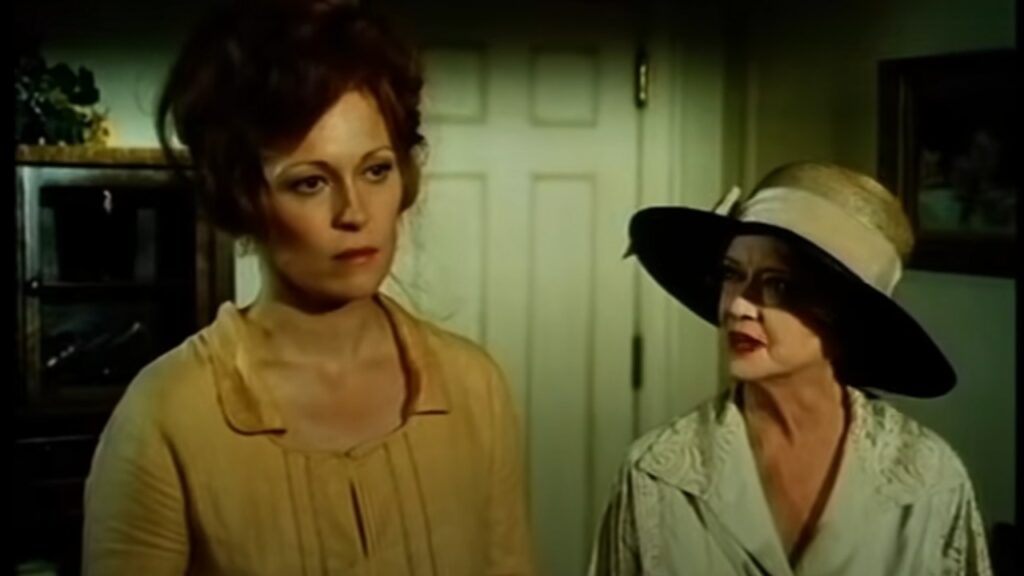
Director Anthony Harvey later recalled that Davis’ disdain was so palpable it altered the geography of the film. Harvey told the New York Times that he would set up a “two-shot” (a frame including both actresses), only to look through the lens and find Davis missing. She had physically scooted her chair out of the frame to avoid being seen in the same shot as Dunaway.
In case you missed it: The Real Story Behind Bette Davis and Joan Crawford’s Decades-Long Feud
In her memoir ‘This ‘n’ That,’ Davis did not mince words. “I can imagine no circumstances under which I would work again with Miss Dunaway,” she wrote, criticizing the younger star’s selfishness. She later labeled Dunaway “the most inconsiderate woman I have ever worked with”.
The Joan Crawford Connection and ‘Mommie Dearest’ Irony
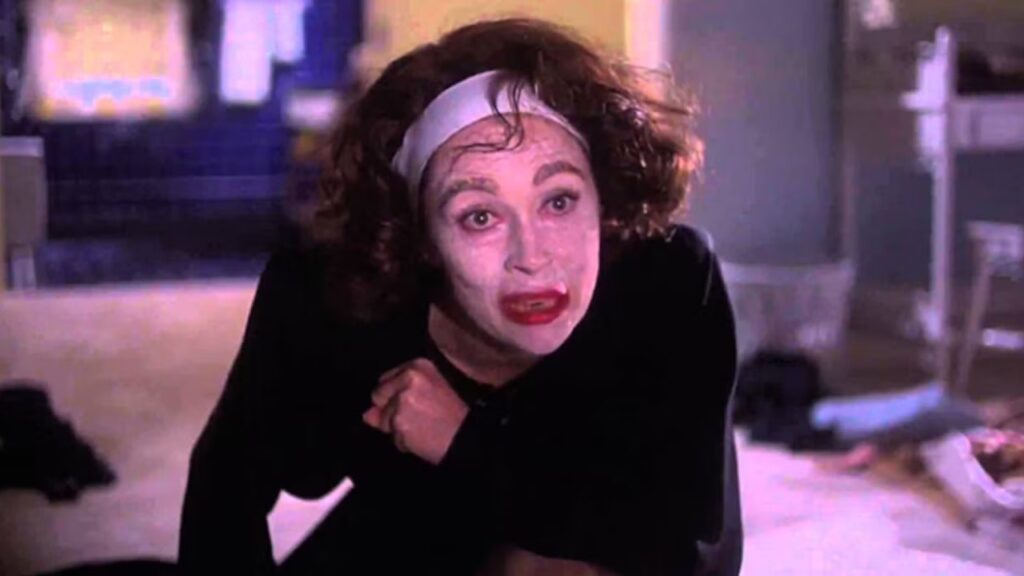
The irony of the Davis-Dunaway rift was cemented five years later. In 1981, Faye Dunaway donned the wire hangers to play Joan Crawford in ‘Mommie Dearest.‘ While Davis had no love for Crawford, she loathed the adaptation of Christina Crawford’s tell-all book, calling it a “detestable” exploitation of a (however disliked) colleague.
Dunaway, for her part, remained largely silent during Davis’ life, a decision she later regretted. In her 1995 autobiography, Dunaway wrote, “I was silent too long about … Bette Davis. I didn’t want to get into fights in the press“. When she finally did speak, she theorized that Davis’ rage was born of something deeper than tardiness. “I was just the target of her blind rage at the one sin Hollywood never forgives in its leading ladies: growing old,” Dunaway said.
Yet, for the public, the damage was done. When Johnny Carson asked Davis who the “worst person in Hollywood” was, the answer was instantaneous, bypassing Crawford entirely. “One million dollars, Faye Dunaway,” Davis snapped. The queen had spoken, solidifying a feud that proves that in Hollywood, the drama behind the camera is often more compelling than the script.
You might also want to read: The Troubled Childhood That Shaped Joan Crawford’s Most Iconic Performances