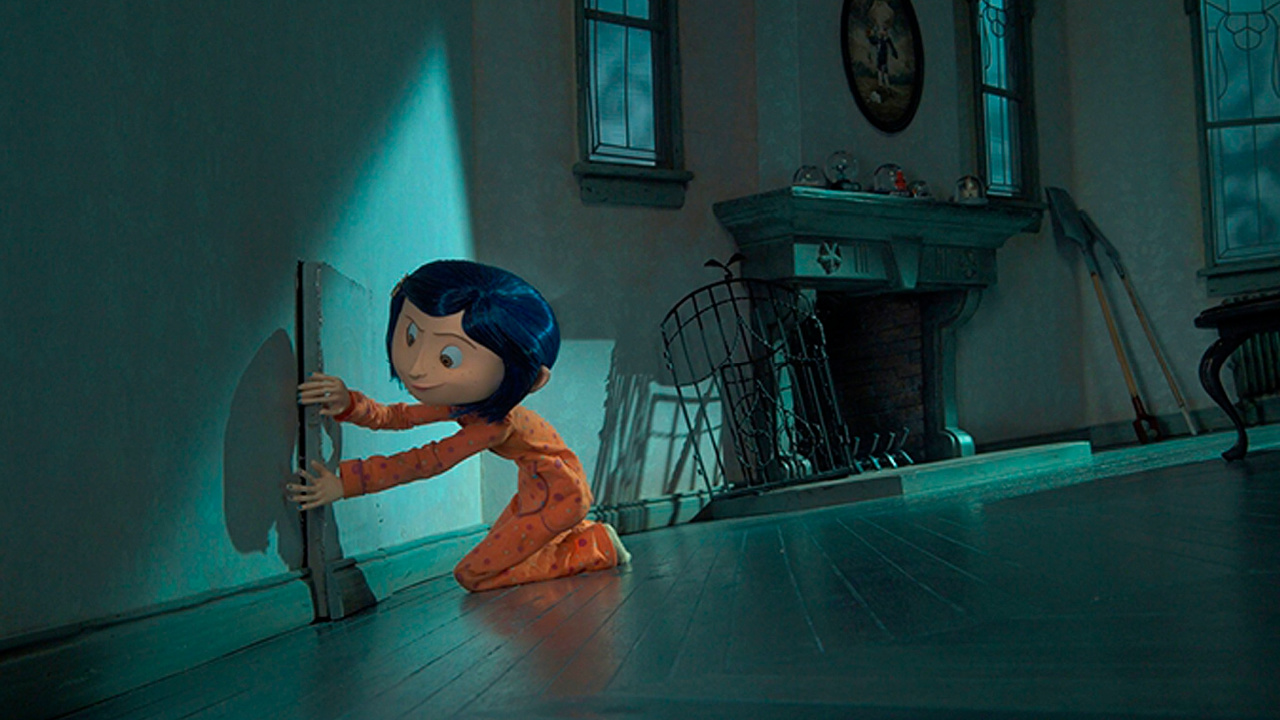
For horror and fantasy enthusiasts, ‘Coraline’ is a perfect offbeat movie. Released in 2009, this stop-motion film creates an eerie, unsettling atmosphere. It is a deep exploration into the unknown, and this is precisely why it’s not for those with weak hearts.
But here’s the thing. Despite its alluring, Burton-esque gothic visuals, the movie still missed the mark. While it’s all fabulous, it failed to capture one of the core essences of Neil Gaiman’s works. The movie dialed down some elements, and here’s how it fumbled badly.
The Addition Of An External Factor In ‘Coraline’
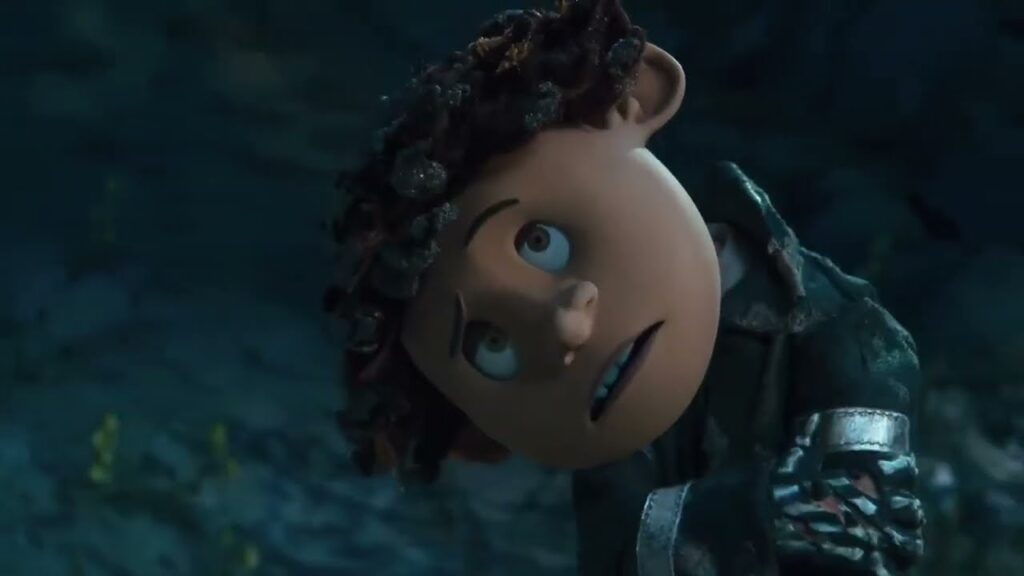
Those who have read Gaiman’s ‘Coraline’ know that this movie adaptation is far murkier. The novella features no such external force, or a character named Wybie Lovat. In the movie, however, the character is introduced to make it less potent and also to counter a major issue: inner monologues. The character popped up so that Coraline would have someone to talk to.
Related: Sony Expands The Spider-Verse With 2 Brand-New Animated Movies
The major chunk of the book features multiple inner self-talks, but it somehow caves in, creating a void in a way. After all, it is difficult to have a movie completely loaded with inner talk, meant for Wybie’s character. Interestingly, his introduction also gradually changes how the story flows. The entire scene of Coraline’s confrontation with the Beldam doesn’t involve Wybie in the book.
In the movie, we see him helping her at the right time. He also helps her understand the dangers of the Pink Palace and acts as a pillar of strength. Since the character is nonexistent in the book, Coraline fights her way through the entire ordeal and makes it out alive. It also simultaneously ties in with how the movie numbed the entire macabre of Gaiman’s novel.
A Dialed-Down Adaptation Of Neil Gaiman’s Macabre Fest
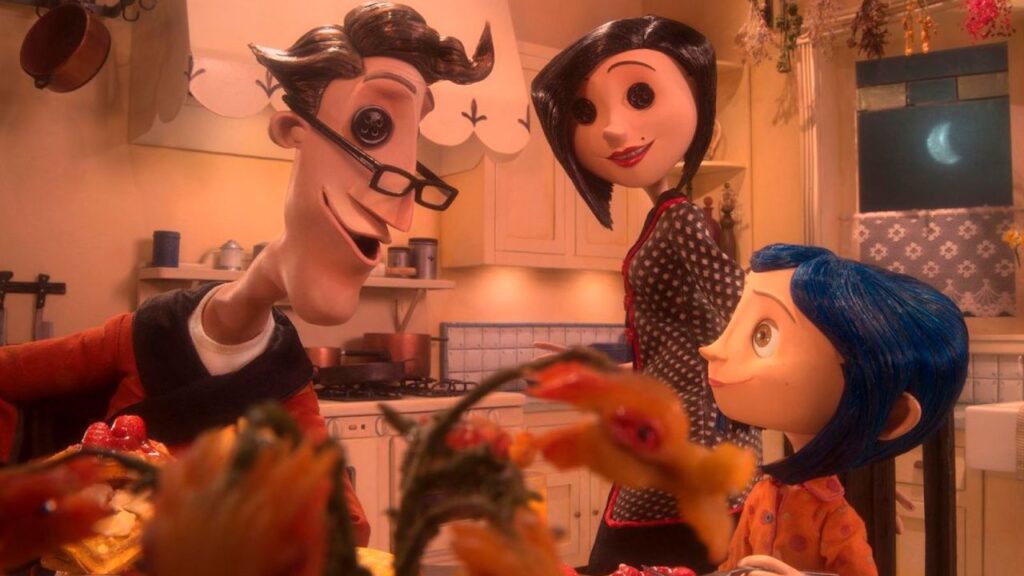
Although scary, Henry Selick’s movie is a dialed-down adaptation of Gaiman’s novel. The book, in reality, is much darker, gorier, and deeply unsettling. It is perturbing in the manner in which Gaiman has described all the creatures and figures. As a child, Coraline battled the Beldam alone. Mind you, the latter is an arachnid that turns into a skeletal specter.
In case you missed it: 9 Movie Villains That Scared Us During Childhood And Are Still Terrifying
It develops button eyes and grows to have a taller, slender appearance, but that’s not it. The paleness adds to the anomalous nature of the Other Mother, giving anyone the creeps for a lifetime. The book is more visceral, especially as Coraline fends off the Beldam, followed by her vanquishing of the creature’s hand. And it does serve as closure in the movie.
In the book, it is a chilling prelude to the impending horror, echoed by the ghosts. What Selick’s adaptation does is give one hope for a resolved ending. But it is contrary to the ever-present doom, the horror, and the mayhem present in Gaiman’s book. It is an endless void, sanitized and rendered rather presentable in the movie version. But despite everything, the animated movie still struck a chord with some viewers.
In conclusion, the movie gave its own unique spin on horror and fantasy, and it is spot-on with most of the elements. So while ‘Coraline’ diluted the essence and the macabre present in the book, it served its purpose as a horror-goth fantasy movie. It excelled in its splendid visuals and storytelling, especially its stop-motion animation, and for that, it truly deserves praise.
You might also want to read: 10 Best Animated Christmas Movies The Whole Family Will Love