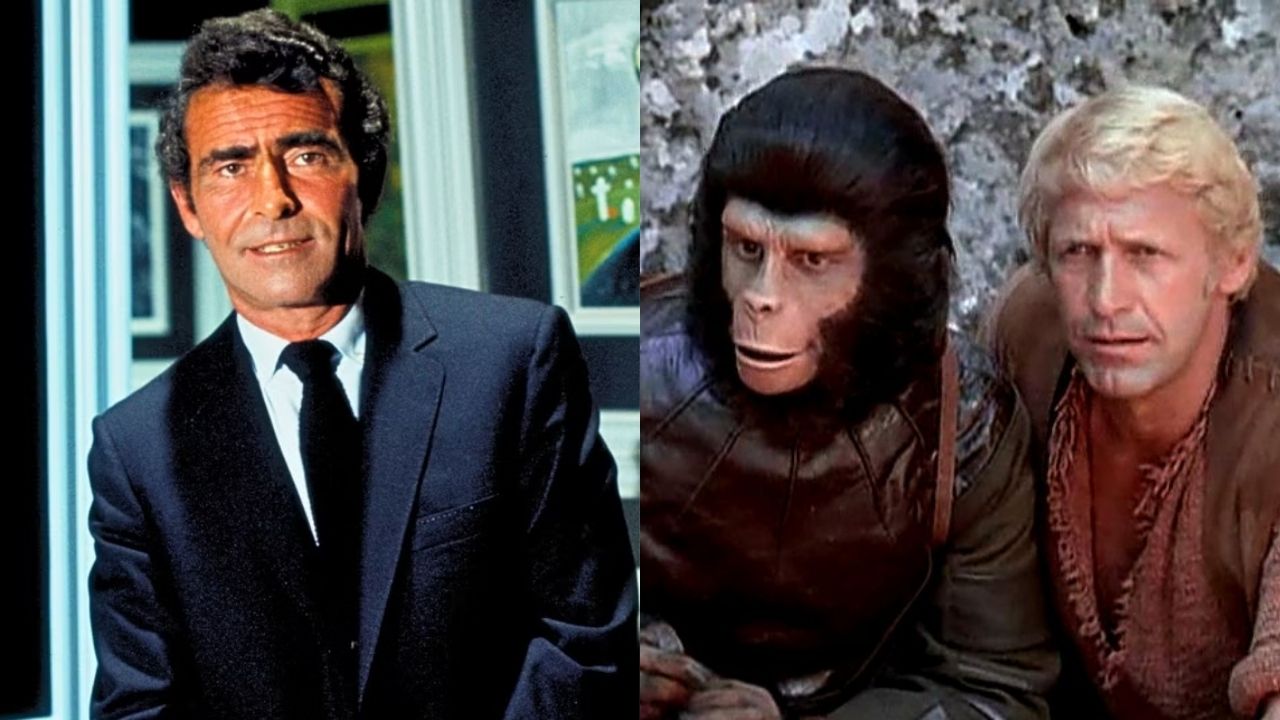
Rod Serling nearly delivered a very different ‘Planet of the Apes‘ television series that pushed the franchise into darker territory before CBS ever aired its 1974 version. The creator of ‘The Twilight Zone‘ built a more intense take on the Apes universe. But the audiences never saw that version.
Serling’s material was ultimately shelved, and the network moved ahead with a toned-down version. That decision left behind one of the most intriguing concepts in sci-fi history.
How Rod Serling’s Twisted ‘Planet of the Apes’ Almost Happened
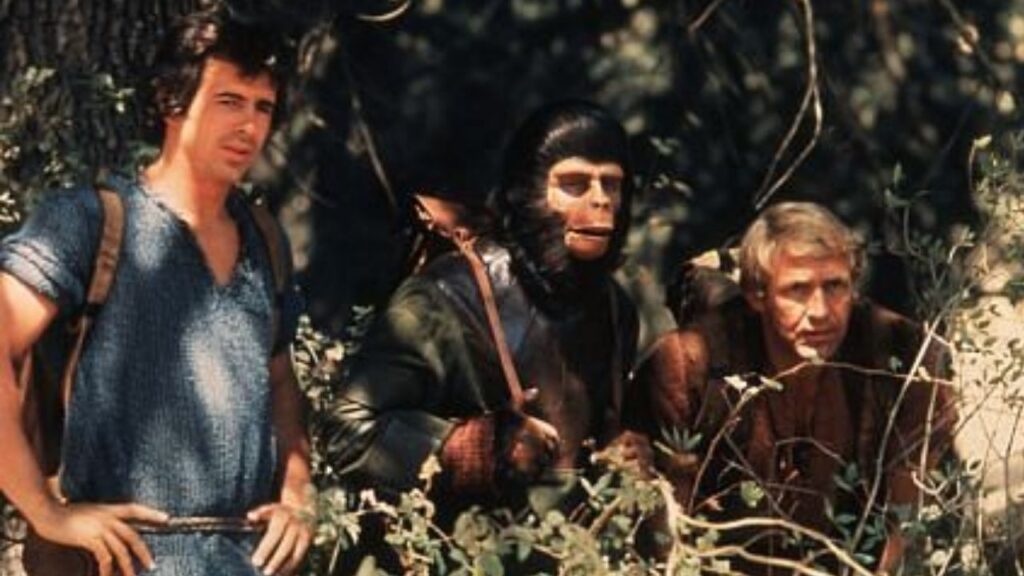
The ‘Planet of the Apes‘ film saga started strong and ambitious, but the franchise began losing momentum by the early 1970s. The first film arrived in 1968, which led to the ‘Battle for the Planet of the Apes‘ in 1973. Each sequel earned less money, and people behind the scenes felt the big-screen version had reached its natural endpoint.
Related: 10 Sci-Fi Movies That Took Their Craziest Ideas From Real Life
Television offered a new way forward. Producers had discussed a weekly ‘Planet of the Apes‘ series as early as 1971, but development stalled while the films remained in production. After ‘Battle‘ was released, 20th Century Fox bought the rights and quickly began exploring a TV adaptation. CBS ratings made the move feel safer, since Planet, Beneath, and Escape performed strongly when broadcast on the network.
Fox also brought in Rod Serling, who had already carried serious Apes credibility as a co-writer on the original ‘Planet of the Apes‘ screenplay. And, his reputation as the creator of ‘The Twilight Zone‘ made him a bold choice for television. Serling wrote the series bible and the first two scripts, and he made his intentions clear; he didn’t want a basic weekly remake of the movies.
Serling’s Apes Universe Treated Humans as Hunted Prey, Not Heroes
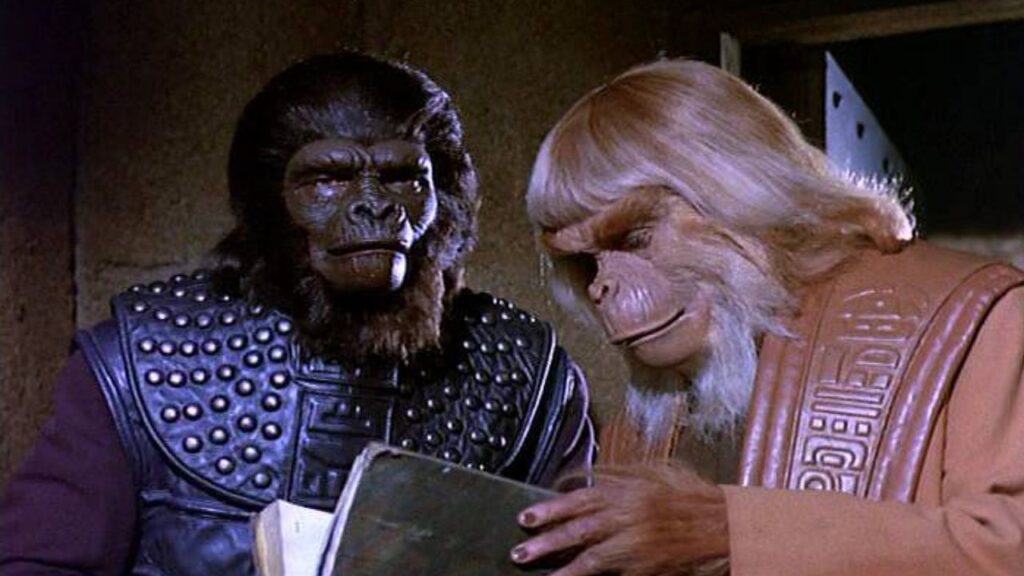
Serling’s story followed astronauts Allan Virdon and Stanley Kovak as they traveled to search for the long-missing Colonel George Taylor. The mission goes wrong, and they end up stranded on a future Earth ruled by apes. In this version, humans don’t just live under ape rule; they live as a hunted underclass. That idea alone made Serling’s take feel more brutal, because the humans aren’t simply “the underdogs.” They are prey.
The astronauts don’t survive alone for long. They team up with Galen, a chimpanzee who believes extermining humans is wrong. Galen wasn’t an easy friend who agreed with everything the humans said. Galen argues, questions, and defends ape society even though he disagrees with its cruelty. That constant conflict gives the story a darker edge because the group never feels fully safe or united.
In case you missed it: Rosamund Pike Slams One Of The Worst Sci‑Fi Movies Ever Made, Says It Nearly Destroyed Her Career
Serling still wanted the show to feel exciting and watchable every week, so that it never felt like a slow lecture. He believed the Apes world could deliver action while also being smarter than the usual adventure show. It could’ve become the benchmark of Western and science-fiction adventure.
Serling cared most about the relationship between Virdon and Galen. He described it as close, supportive, and competitive at the same time. Galen would defend ape culture using strict logic, almost like Mr. Spock. Meanwhile, Virdon would try to explain how the human world used to be and why it should return.
Serling admitted Galen would often “win” those debates because the ape world surrounds them and supports Galen’s arguments, while Virdon has fewer chances to prove his point. He even pictured a scene that showed how painful that would feel for Virdon, exploring caves beneath the Planet of the Apes while searching for a lost human community.
A Hidden City Mystery Made The Story Too Complex
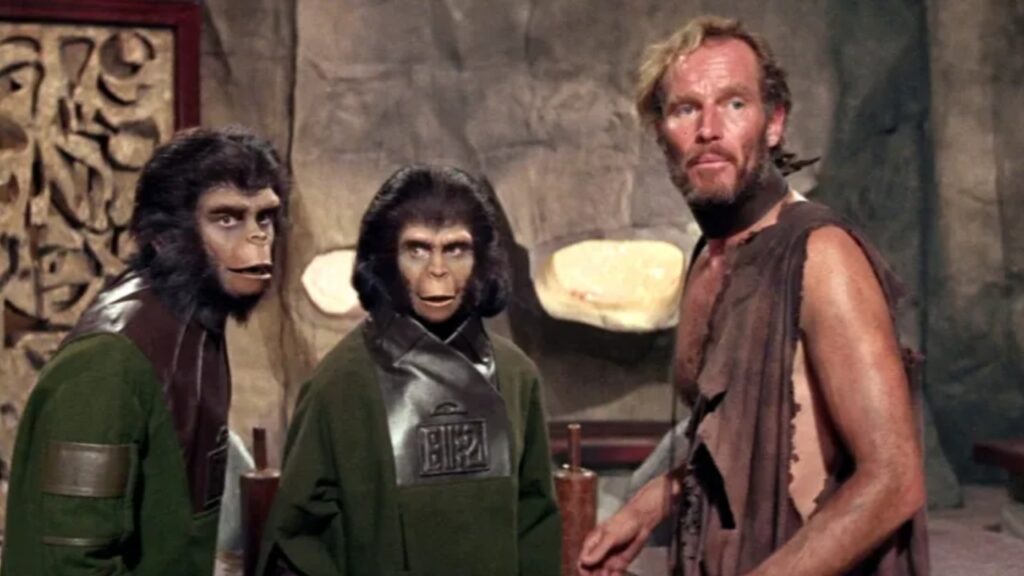
Virdon would eventually uncover a wall tile buried in rock and read the words: “IRT SUBWAY – QUEENBORO PLAZA.” That discovery would prove humans once built a real world. But Serling pointed out that Virdon wouldn’t even know how to explain the meaning of that lost civilisation to Galen.
A bigger mission also pushed Serling’s version into darker territory. He borrowed an idea similar to ‘The Fugitive‘, where the characters don’t only run from danger; they chase a goal. Virdon and Kovak were to follow rumors of a hidden city untouched by catastrophe. It’s a place where apes and humans lived together and shared knowledge instead of suppressing it.
Serling built several clues into the story. A primitive mute girl would show up carrying Taylor’s dog tags, but she couldn’t explain how she got them. The astronauts would later meet an old, wise man whose grandfather had claimed to have seen the city and told stories about it.
Virdon would recognize details from the world he once knew, and he would keep pushing forward because he believed the city had to exist, even if he couldn’t prove it yet.
However, Network TV likely found that story too complicated and too heavy for the early 1970s. Fox set Serling’s work aside and gave the project to Art Wallace, who worked with Anthony Wilson to rework it into an episodic series. And, CBS finally aired the reworked series in September 1974.
You might also like to read: 20 Best Sci-Fi Shows To Watch On Netflix