
Whether it was the picturesque lakeside summer setting or a cast full of conventionally attractive people, ‘Every Year After’ seemed to have everything it needed to become the ultimate summer watch. And of course, there were all the romance tropes we know and adore: the not-like-other-girls heroine, the nerdy but obviously attractive guy, childhood friends turned lovers, years of longing and a second-chance romance.
And yet, it just didn’t work. The internet is still obsessed with Carley Fortune’s book, and all the ingredients to create something truly amazing were obviously there. So, why did ‘Every Year After’ fail to deliver the summer romance we were all hoping for?
‘Every Year After’ Never Found The Right Structure For Its Story

One of the biggest problems holding back ‘Every Year After’ was that it never found a storytelling structure that truly worked. Shows like ‘Off Campus’, ‘Heated Rivalry’ and ‘The Summer I Turned Pretty’ found the perfect balance between drama and actually engaging emotional storytelling. But much of the drama in ‘Every Year After’ comes down to the characters making increasingly ridiculous decisions and then refusing to communicate clearly.
The series had an opportunity to create a genuinely refreshing combination of YA and New Adult storytelling. One half follows high-school-aged characters dealing with the usual coming-of-age problems, while the other fast-forwards to their adult lives and introduces more mature concerns. In theory, that sounds so compelling.
In practice, however, the two halves never sit well together. The constant jumping back and forth in time is handled poorly. It happens so frequently that, by the end, it feels like a cheap trick used purely for dramatic effect. Neither timeline gets enough room to become genuinely compelling, and the audience never has the chance to build a proper emotional connection to either version of the story.
In Carley Fortune’s book, the timeline shifts worked because they were tied to themes of regret, memory, and coming to terms with the past. In the series, however, the structure just feels like a device designed to manufacture drama rather than create something emotionally complex.
Percy And Sam Never Had A Romance Worth Rooting For

The bigger issue, however, is the lack of chemistry. Percy and Sam’s relationship, which should have been the cornerstone of the entire series, somehow becomes its weakest element. And what is a romance drama without any worthwhile romance?
First of all, the adult versions of the characters do not seem particularly different from their teenage selves. Where is the character development? Where is the maturity, perspective, and emotional intelligence that should come with time? They clearly have not learned much from years of failed communication, and it is difficult to build a meaningful romance between characters who just don’t feel human.
Sam is particularly difficult to root for. And that is worth noting because audiences are generally willing to embrace complex and flawed characters, even in romance dramas. A flawed love interest is not the problem. But something about Sam never quite clicks, and the series never fully convinces us of his chemistry with Percy.
Their entire relationship is a cycle of pushing each other away, only for their romance to bloom when summer arrives. The problem is that the story was never really supposed to be about “will they or won’t they”? The appeal was always the question of “how do they get back to each other?”
That is where the series needed to go, but it never does. We wanted to see the characters take meaningful, emotionally mature actions, own up to their mistakes, and actually try to fix them. For once, we would have liked to see them actually communicate.
In Case You Missed It: 10 Biggest ‘Every Year After’ Book Vs. TV Show Changes
The Book-To-Series Changes Created Problems We Didn’t Need
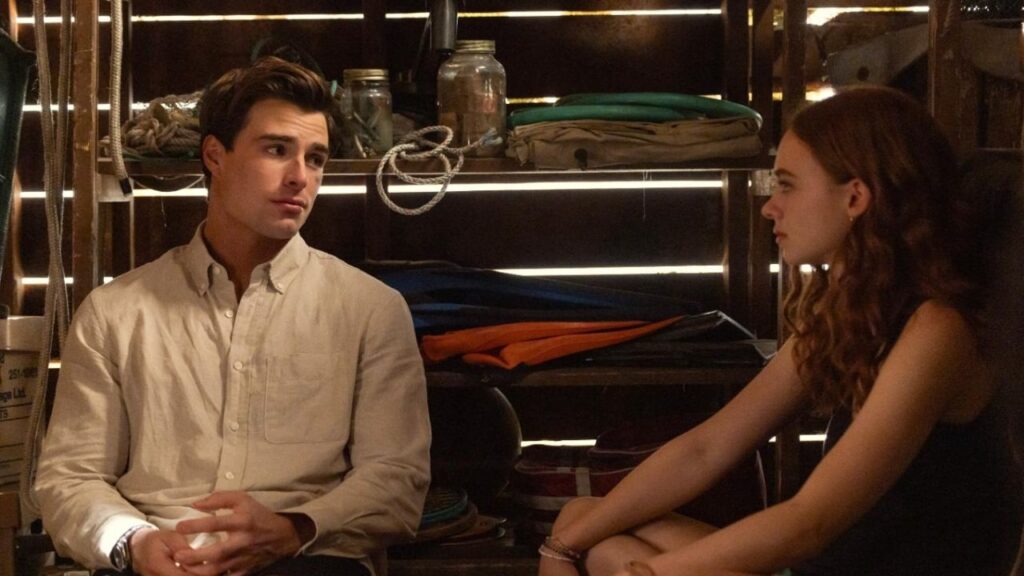
The unnecessary changes from the book are another major reason why ‘Every Year After’ struggles. These changes do not serve the emotional heart of the story. Instead, they are once again designed to serve the production of the series. At times, it feels like ‘Every Year After’ could have worked much better as a movie that stayed faithful to Fortune’s book rather than a series that unnecessarily stretches the narrative.
The most frustrating change was the decision not to let Sam know about Charlie and Percy. The series treats this as a climactic reveal, but does it really serve the story in any meaningful way? If the goal was to create an authentic second-chance romance, they should have kept the revelation as it was in the book.
In an interview, showrunner Amy B. Harris explained the reason behind the change: “I felt you need to have an understanding of the characters before you learn that. You need to be able to see how we got there. And I think you have to spend that time with them before the reveal.”
But achieving that through the non-linear timeline was the point all along. The series was supposed to show us how the characters dealt with this situation both in the past and in the present. That would have made far better use of the show’s non-linear structure instead of changing a crucial part of the story simply to create a more dramatic reveal.
‘Every Year After’ Was Ultimately Disappointing In Every Single Way

The fact that the show had such strong source material in its hands but still managed to waste its potential is perhaps the biggest disappointment.
Not every change from the book, however, was necessarily a mistake. Chantal’s much larger presence in the series, for example, was actually an interesting change. Many viewers have pointed out that it was unnecessary or distracting. But in reality, it is a great example of what can happen when an adaptation veers slightly off-script and creates something that translates better onscreen.
Aurora Perrineau’s performance as Chantal was fantastic, and she brought a much-needed liveliness to the show. Her relationship with Percy, the friendship between the three girls, and her romance with Jordie were all genuinely interesting to watch. It is proof that changing the source material was never the problem. But when those changes are not meaningful, that is where the real problem lies.
Unfortunately, ‘Every Year After’ will likely just get lost in the plethora of romance series we have these days. But the fact that Carley Fortune’s book had the potential to create something deeper, richer, and more emotionally complex will always remain a painful reminder of what this adaptation could have been.
You Might Also Like To Read: 10 Shows For ‘Every Year After’ Fans